
Introduction
Easter Ooey Gooey Butter Cookies are the kind of confection that makes a holiday feel instantly warmer and more playful.
As a recipe creator and devoted home baker, I adore small, nostalgic treats that transport people back to childhood while still feeling sophisticated enough for a brunch spread. These cookies do exactly that: they balance a tender, buttery base with a soft, almost creamy interior and pops of pastel candy that read like a celebration on the tongue.
What I love most about writing and sharing this recipe is how forgiving it is in the hands of a home baker. The dough is forgiving and friendly, the technique prioritizes texture over perfection, and the result is a cookie that looks delightful in a basket without requiring complicated plating or decoration.
In the paragraphs that follow I’ll walk you through everything a home baker needs to know—from the sensory profile that makes these cookies special to the exact ingredients and step-by-step assembly. Along the way I share small stylistic tips and technique notes that lift a good cookie into the realm of unforgettable.
Whether you’re baking for egg hunts, a spring brunch, or a cozy afternoon with a coffee, these cookies are designed to be approachable, transportive, and irresistibly soft.
Why You’ll Love This Recipe
Why these cookies earn a permanent spot in your holiday rotation
There are several reasons I recommend these cookies to both novice and experienced bakers. First, they deliver a texture contrast that feels indulgent without being heavy: a delicate outer dusting yields to a buttery, slightly plush center. This interplay is what I mean when I say a cookie is ‘ooey gooey’ in the best possible way.
Second, the cookie’s flavor profile is approachable—pure butter and cream cheese provide a subtle tang and richness that plays beautifully against the sweet crunch of candy pieces. The pastel candies add color and playful texture, making the cookies aesthetically perfect for Easter baskets and seasonal parties.
Third, the dough is adaptable. You can embrace the recipe as written for a classic result or experiment with small swaps—different mix-ins, a hint of citrus zest, or a sprinkle of flaky salt at the end—to tune the cookies to your taste. That flexibility makes them a favorite to teach friends or to bring to potlucks where you want a crowd-pleasing, easily portable treat.
Lastly, these cookies are a joy to photograph and package: their pastel tones and soft texture read wonderfully in natural light, and they store well enough to be made ahead for easter baskets without losing their charm.
Flavor & Texture Profile
Understanding what makes the finished cookie sing
I like to break a cookie down into three elements: base flavor, texture layers, and finishing notes. For these butter cookies, the base flavor is a rich, clean butter tone with a subtle tang from the cream cheese. This combination keeps the palate interested and prevents overwhelming sweetness.
Texture is where these cookies become memorable. There’s a silky, tender crumb beneath a fine, slightly crackled exterior created by a light coating of confectioners’ sugar. When you bite in, the initial resistance of the sugar gives way to a soft, almost custardy interior that gently compresses around the pastel candy inclusions. Those candies contribute quick, crisp bursts that contrast with the dough’s plushness.
In terms of mouthfeel, expect a delicate melt that lingers pleasantly rather than an overly dense chew. The cream cheese adds a moisture-stabilizing element that keeps the cookie from drying out, which means each bite remains tender even when the cookies are a day old.
If you’re thinking about flavor tweaks, here are subtle directions to consider: a whisper of citrus zest brightens the butter, a tiny pinch of fine sea salt enhances contrast, and using a high-quality vanilla extract deepens the aromatic backbone without changing the cookie’s signature character.
Gathering Ingredients
Ingredients — gather everything before you begin
A calm, organized mise en place is the baker’s secret weapon. Lay out your ingredients and equipment so you can work confidently through the assembly process. I recommend arranging items in order of use and having measuring implements at the ready.
- Salted butter — softened but still cool to the touch.
- Cream cheese — brought to the same temperature as the butter for even creaming.
- Granulated sugar — for the creamed base.
- Large egg — room temperature helps with emulsification.
- Vanilla extract — a good-quality extract will lift the dough.
- All-purpose flour — the structural backbone of the cookie.
- Baking powder — for gentle lift.
- Confectioners’ sugar — used for coating to create a soft crust.
- Pastel M&M’s — the festive inclusions that add color and crunch.
Beyond ingredients, prepare your tools: mixing bowl, hand or stand mixer, scoop, baking sheets, and cooling rack. Lining your pans prevents sticking and preserves the cookies’ delicate undersides.
Organizing like this not only speeds the baking process but reduces the chance of omission, which is especially helpful when you’re juggling a holiday timeline and want to keep everything smooth and joyful.
Preparation Overview
A clear plan before you turn on the oven
Before you begin the actual mixing, take a moment to visualize the workflow: you’ll cream your fats with sugar, incorporate wet ingredients for structure and shine, fold in the dry ingredients for gentle gluten development, and finish by coating and baking to create that signature tender exterior. Preparing this mental roadmap makes the process feel calm and methodical rather than hurried.
Temperature and timing matter, but it’s the feel and rhythm that will guide you. For creaming, aim for a light, aerated texture without overworking the mixture; this keeps the cookies tender rather than tough. When the dry ingredients are added, mix only until incorporated—overmixing develops too much gluten and changes the bite.
When it’s time to portion, consistency matters. Uniform scoops ensure even baking across a tray and consistent appearance for gift packaging. Rolling the balls gently before coating creates a smooth surface that takes the dusting of fine sugar beautifully.
Finally, observe your cookies in the oven so you can learn how your particular oven behaves. Look for a top that loses its wet sheen but remains soft to the touch; that visual cue is more reliable than a strict number for an ideal, tender interior. These preparation principles help you turn the recipe into a repeatable, confident technique.
Cooking / Assembly Process
Step-by-step assembly and baking instructions
- Preheat your oven and line baking sheets with parchment or silicone mats to ensure easy release and even bottoms.
- In a large bowl, beat the softened butter, softened cream cheese, and granulated sugar until smooth and creamy.
- Add the egg and vanilla extract, beating until fully combined and glossy.
- On low speed, mix in the flour and baking powder until just combined. Add half of the confectioners’ sugar and mix on low until the dough comes together — avoid overmixing.
- Gently fold in the pastel candy pieces, reserving a few for pressing on top of warm cookies if desired.
- Portion the dough into even balls, roll lightly to smooth, then roll each ball in the remaining confectioners’ sugar until evenly coated.
- Place the coated dough balls on prepared sheets with space between them to allow for spreading during baking.
- Bake until the tops no longer look wet but still appear slightly soft; remove and, if desired, press extra candies into the warm tops for a decorative finish.
- Allow cookies to rest briefly on the baking sheet before transferring to a rack to cool completely.
These instructions are laid out to keep the assembly flowing and to highlight the key technical checkpoints: don’t overmix after the flour goes in, maintain gentle handling when folding in the candies, and watch for the visual doneness cue rather than relying solely on a clock.
If you’re working with multiple sheets, rotate them for even coloration. Also, chilling the dough briefly can help with spread control if you prefer a thicker cookie profile. Small adjustments like that allow you to master the exact texture you love.
Serving Suggestions
How to present these cookies for spring gatherings and gifts
These cookies are naturally festive and photograph beautifully, so presentation plays up their strengths. For casual gatherings, arrange them on a simple platter with a few sprigs of fresh herbs or pastel ribbon to echo the candy colours. For an Easter basket or gift box, stack them between sheets of wax paper and tie with a ribbon or place in a windowed cookie box for an elegant, homespun touch.
If you’re assembling a brunch spread, pair the cookies with lighter beverages that balance their buttery richness: milky coffee, a bright citrus tea, or a sparkling beverage with a squeeze of fresh fruit. For an adult crowd, a small cup of espresso or an herb-forward cocktail offers a lovely contrast.
When serving to kids or at family events, consider a colorful arrangement: nestle the cookies among fresh fruit or small, edible flowers for a charming display. You can also create a cookie-decorating station where warm cookies are topped with extra candies or drizzled lightly with a simple glaze for a hands-on activity.
Keep plates or boxes lined and avoid stacking too many high to preserve the delicate crust. These small touches turn a simple cookie into an occasion without requiring elaborate effort.
Storage & Make-Ahead Tips
Keeping your cookies tender and festive for days
One of the great advantages of these cookies is their make-ahead friendliness. You can prepare and shape dough in advance and finish baking near serving time, or bake ahead and store with a few simple strategies to retain texture and freshness.
If you choose to refrigerate or freeze shaped dough, give it a gentle brush with extra confectioners’ sugar after thawing or before baking to refresh the exterior texture. When baked cookies are stored, place them in an airtight container layered with parchment or wax paper to prevent sticking and to preserve the soft interior. Room temperature storage is suitable for short-term keeping; for longer storage, freeze baked cookies between sheets of parchment in a sealed container. Thaw gently to avoid condensation forming on the surface.
For gifting, assemble boxes the day before and keep them in a cool, dry place to prevent candy bloom or melting. If you like a slightly crisper exterior after storage, allow cookies to sit uncovered for a short period before serving, which encourages a gentle firming of the crust while the center remains tender.
Finally, if you plan to make these well in advance, consider freezing dough balls for up to several weeks and baking them from frozen with a slight time adjustment; this approach yields fresher-tasting cookies on the day of the event without extra work.
Frequently Asked Questions
Common questions and helpful clarifications
- Can I swap the pastel candies for another mix-in?
Yes. The dough welcomes other inclusions like white chocolate chips, chopped nuts, or small candy pieces; choose mix-ins that won’t release too much moisture. - What if my dough seems too sticky to roll?
A short rest in the refrigerator can help firm the dough for easier handling; gentle chilling also controls spread. - How can I prevent the candies from bleeding color?
Pressing extra candies onto warm cookies after baking reduces the chance they melt and bleed; using high-quality candies with stable coatings helps too. - Can I make these ahead for an event?
Yes. You can shape and freeze dough balls or bake fully and store them layered with parchment for several days. Thaw and refresh as needed.
These answers cover the most frequent questions I receive when sharing this recipe at workshops and family gatherings. If you’d like troubleshooting for a particular oven or substitution, I’m happy to provide tailored adjustments.
Final FAQ note: if you have a specific dietary requirement or a unique serving scenario, tell me about it and I’ll suggest the best swaps and handling techniques to keep the cookies tender and festive.
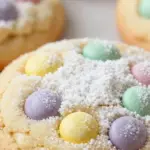
Easter Ooey Gooey Butter Cookies
Ingredients
- ½ cup (113 g) salted butter, softened 🧈
- 1 package (8 oz / 226 g) cream cheese, softened 🧀
- 1 ½ cups (300 g) granulated sugar 🍚
- 1 large egg, room temperature 🥚
- 1 teaspoon vanilla extract 🍦
- 2 ¼ cups (282 g) all-purpose flour 🌾
- 1 tablespoon baking powder 🧂
- 1 cup (125 g) confectioners’ sugar, divided ❄️
- 1 cup (203 g) Easter M&M’s, pastel milk chocolate 🍫🟣🟡🟢
- Optional: extra M&M’s for topping 🍬
- Parchment paper or silicone baking mat for lining 🧻
Instructions
- Preheat oven to 350°F (175°C). Line baking sheets with parchment paper or silicone mats.
- In a large bowl, beat the softened butter, softened cream cheese, and granulated sugar until smooth and creamy, about 2–3 minutes.
- Add the egg and vanilla extract, beating until fully combined and glossy.
- On low speed, mix in the flour and baking powder until just combined. Add ½ cup of the confectioners’ sugar and mix on low until the dough comes together — do not overmix.
- Gently fold the pastel M&M’s into the dough, reserving a few for pressing on top after baking if desired.
- Using a 2-tablespoon scoop (or tablespoon for smaller cookies), portion dough and roll each ball lightly to smooth. Roll each ball in the remaining ½ cup confectioners’ sugar until evenly coated.
- Place about 6 dough balls per prepared baking sheet, spacing them at least 2 inches apart to allow for spreading.
- Bake for 13–16 minutes, beginning to check around 11 minutes. Cookies are done when the tops no longer look wet but still appear slightly soft — they will set as they cool.
- If desired, press a few extra M&M’s into the warm tops of the cookies immediately after removing from the oven for a festive look.
- Let cookies cool on the baking sheets for 5 minutes, then transfer to a wire rack to cool completely before serving or storing.