
Introduction
Bright, buttery, and unexpectedly citrusy — these lemon brownies arrive like a sunbeam on your dessert plate.
As a food writer who loves tempering rich, indulgent textures with zesty lifts, I find these bars offer the best of both worlds: the dense, tender crumb you expect from a brownie-style bar, and a lively lemon brightness that keeps each bite from feeling heavy.
This introduction is about mood and technique rather than measurements: imagine a glossy batter that smells like warm butter and fresh lemon, the top turning a delicate golden edge in the oven while the center remains moist and tender. The contrast between the brown sugar’s caramel notes and the lemon’s high notes gives the bars a layered flavor profile that rewards slow-chewing and curious palates.
I often reach for this recipe when I want a dessert that feels both familiar and modern — a treat that pairs beautifully with afternoon tea, coffee, or a scoop of simple vanilla ice cream.
Baking these brownies is accessible even for home bakers who are still building confidence: the techniques are straightforward, and small adjustments to texture or glaze let you make them your own.
Read on for a deep dive into the flavors, the best ways to gather ingredients, and step-by-step assembly guidance so your pan comes out perfectly every time.
Why You’ll Love This Recipe
There are simple pleasures in a dessert that surprises you.
These lemon brownies combine comforting, rich butteriness with a lemon lift that brightens the palate rather than overwhelms it. The appeal is threefold: approachability in technique, versatility in serving, and a flavor balance that is both nostalgic and fresh.
Start with approachable techniques: melting butter, whisking sugar and eggs to a glossy sheen, and folding dry ingredients gently to maintain tenderness — all methods that home bakers encounter frequently and can execute successfully. This recipe rewards attention to texture rather than precise, intimidating skill.
Next, think about versatility: these bars are perfect at room temperature for a casual snack, chilled for a denser bite, or lightly glazed to add an elegant sheen and a bit of tang. They make excellent gifts because they travel well, slice cleanly when cooled, and keep their character for several days when stored properly.
Finally, the flavor balance is precisely why you’ll come back: the brown sugar’s molasses whisper anchors the lemon brightness, while a touch of cornstarch gives the crumb a pleasing, delicate bite. If you enjoy desserts that combine comfort and brightness, these bars will become a reliable favorite in your baking rotation.
Flavor & Texture Profile
Flavor-wise, these brownies walk a delightful line.
The dominant impressions are buttery richness and warm caramel notes from the brown sugar, followed closely by a purposeful lemon presence that adds acidity and lift. The lemon element should taste fresh and fragrant rather than medicinal; the goal is aromatic citrus that enhances rather than competes with the base. A subtle salt background amplifies sweetness and brightens flavors, while the baking powder contribution gives a gentle rise and keeps the crumb from becoming cloying.
Texturally, the bars aim for tender and slightly dense.
Because the batter is structured more like a thick cake-brownie hybrid, you’ll notice a close, moist crumb with a silky interior and gently golden edges. Cornstarch acts like a baker’s little secret here: it lightens the crumb and lends a soft, almost shortbread-like tenderness without compromising structure. The finished texture should be firm enough to slice cleanly yet soft when bitten into, with occasional chewy notes from the brown sugar.
If glazed, the thin sugar glaze adds a glossy finish and an extra zingy layer of acidity; it firms slightly when set and provides a quick contrast in mouthfeel to the tender interior.
In short, expect a buttery, citrus-forward bar with a tender, satisfying bite that feels indulgent but bright.
Gathering Ingredients
Assemble everything before you begin — baking is easiest when your mise en place is complete.
Below is the structured ingredient list used for this recipe; having them measured and ready will keep the process smooth and stress-free:
- 1 cup (2 sticks / 227 g) unsalted butter, melted
- 1 ¾ cups (350 g) light brown sugar, packed
- 3 large eggs, room temperature
- ¼ cup (61 g) fresh lemon juice
- 1 teaspoon lemon zest
- 2 ½ cups (312.5 g) all-purpose flour
- 2 teaspoons cornstarch
- 1 teaspoon baking powder
- ½ teaspoon kosher salt
- Optional glaze — 1 cup (125 g) confectioners’ sugar (powdered sugar)
- Optional glaze — 2 tablespoons lemon juice (or water for milder flavor)
Ingredient tips and swaps:
- Use unsalted butter so you can control the salt level precisely; if you only have salted butter, reduce any added salt slightly.
- Light brown sugar adds a caramel depth; if you prefer a cleaner sweetness, a blend of half white and half brown sugar can work, though the flavor will shift.
- Fresh lemon juice and zest are essential for bright, authentic citrus notes; bottled juice will lack the same aromatic lift.
- Cornstarch helps keep the crumb tender — don’t omit if you want that delicate texture.
Ingredients image prompt description: Realistic flat-lay of all the raw, uncooked ingredients used in the recipe, arranged clearly and simply on a neutral background.
Preparation Overview
A clear preparation plan sets the tone for success.
Before you begin mixing, consider the order and timing of tasks so the workflow feels intuitive. Start by preparing your pan—lining it with parchment or greasing and flouring it—so it’s ready the moment the batter is mixed. Then, melt butter and allow it to cool slightly while you measure dry ingredients. Room-temperature eggs help ensure a smooth, glossy batter when incorporated; if your eggs are chilled, bring them to room temperature ahead of time.
Organization also means using the right bowls and tools: a large mixing bowl for combining wet ingredients, a medium bowl for the dry mix, a spatula for folding, and an offset spatula for smoothing the batter into the pan. A whisk is helpful for dissolving the sugar into the melted butter and aerating the eggs slightly, and measuring spoons and cups will keep proportions consistent.
Timing and sensory cues are your friends: pay attention to batter sheen, the way the dry ingredients disappear into the wet mix, and the batter’s consistency on the spatula. The batter should be smooth and glossy with visible specks of lemon zest; when spread, it should hold together without being overly stiff.
These small preparation choices — neat mise en place, correct tools, and sensory awareness — make the assembly and baking process feel less like a checklist and more like a practiced ritual.
Cooking / Assembly Process
Follow these structured steps for a reliable assembly and bake.
The numbered instructions below provide the explicit sequence to transform ingredients into luscious lemon brownies. They are written as the canonical procedural guide you should follow at the stove and in the oven:
- Preheat oven to 350°F (175°C). Line a 9×9-inch (23×23 cm) pan with parchment paper, leaving an overhang for easy removal, or lightly grease and flour the pan.
- In a large bowl, whisk together the melted butter and light brown sugar until smooth and well combined.
- Add the eggs one at a time, mixing well after each addition so the batter becomes glossy and even.
- Stir in the ¼ cup fresh lemon juice and the lemon zest until evenly distributed.
- In a separate medium bowl, whisk together the all-purpose flour, cornstarch, baking powder, and kosher salt.
- Gradually fold the dry ingredients into the wet mixture until just combined — be careful not to overmix.
- Spread the batter evenly into the prepared pan, smoothing the top with a spatula.
- Bake for 35–45 minutes, or until the edges are golden brown and a toothpick inserted near the center comes out with a few moist crumbs. (If using a 9×13-inch pan, bake 25–30 minutes — bars will be thinner.)
- Remove from the oven and allow the brownies to cool completely in the pan on a wire rack before glazing.
- Glaze (optional): In a medium bowl, whisk the confectioners’ sugar with 2 tablespoons lemon juice (or water for less lemon flavor) until smooth and pourable.
- Pour the glaze over the cooled brownies, spreading to the edges. Let the glaze set, about 15–20 minutes, then lift the brownies from the pan using the parchment overhang and cut into squares.
- Serve at room temperature. Store airtight for up to 3 days (refrigerate if glazed and kept longer).
Cooking image prompt description: Realistic action shot of the batter mid-assembly or mid-bake showing visible texture changes and tools in use, not a finished plated dessert.
Serving Suggestions
Presentation transforms a simple bar into a memorable bite.
When serving lemon brownies, consider contrasts that highlight their bright flavor and buttery texture. A light dusting of powdered sugar or a thin, glossy lemon glaze will add an elegant finish and a hint of extra acidity. For a casual presentation, arrange squares on a baker’s board with lemon wedges and sprigs of mint for color and a fresh aroma.
Pairing suggestions lean into balance: a cup of strong black tea or a citrus-forward herbal tea complements the bars, while milder coffee provides a grounding counterpoint to the brightness. If you want a more indulgent pairing, serve a warm square with a small scoop of vanilla bean ice cream — the cold cream contrasts pleasantly with the tender crumb and citrus tang.
Consider temperature and texture variations: serve chilled for a denser, more compact bite; serve slightly warm for a softer, more tender experience; serve glazed for visual appeal and an added tart layer. For entertaining, cut the bars into uniform small squares and stack them on a tiered tray for an afternoon gathering.
Garnish ideas: a few delicate edible flowers, finely grated lemon zest, or a little crumble of toasted sugar for crunch. These small touches elevate the humble bar into an occasion-ready dessert without masking the core lemon-butter characters.
Storage & Make-Ahead Tips
Plan ahead and keep texture top-notch.
These bars are an excellent candidate for make-ahead baking because they hold their flavor and structure well when stored properly. After cooling completely, store squares in an airtight container at room temperature for short-term keeping. If glazed, store the pan covered in the refrigerator or transfer slices to a container with layers separated by parchment to prevent sticking.
If you’re making them ahead for an event, bake and cool the bars completely, then wrap the uncut slab tightly in plastic wrap and store in the fridge for a day or two; allow to come to room temperature before slicing to get cleaner edges. For longer storage, cut into squares and freeze in a single layer on a sheet pan until firm, then transfer to a freezer-safe container with parchment between layers; thaw in the refrigerator overnight before bringing to room temperature.
Reheating and serving: if you prefer a warm bite, reheat individual squares briefly in a low oven or toaster oven until just warm — avoid over-heating, which can dry the crumb. If the bars were glazed, brief warming is best done gently to avoid melting the glaze entirely.
These small storage strategies — keeping things airtight, protecting glazed surfaces, and thoughtful reheating — preserve the bars’ tender crumb and bright lemon notes so they taste freshly baked whenever you serve them.
Frequently Asked Questions
Q: Can I make these lemon brownies with bottled lemon juice?
A: Fresh lemon juice and zest give the brightest, most aromatic citrus notes. Bottled juice will work in a pinch, but expect a flatter, less vibrant lemon character.
Q: Why is cornstarch included?
A: Cornstarch contributes to a tender, slightly delicate crumb by reducing gluten formation; it helps the bars stay soft without becoming cakey.
Q: My edges baked faster than the center — what did I do wrong?
A: Uneven baking can come from oven hot spots, a too-thin pan, or overbaking at the edges. Use an oven rack placed centrally and test for doneness by looking for set edges with a slightly moist center. Rotating the pan halfway through baking can help even color if your oven has hot spots.
Q: Can I substitute different sugars or flours?
A: Substitutions will change texture and flavor; using different sugars alters caramel notes, and alternative flours may require adjustment. For best results, follow the listed ingredients or make small experimental batches to learn the effects.
Final note: Baking is both science and intuition. Use these FAQs as starting points, trust sensory cues like batter sheen and texture, and don’t be afraid to adapt garnish or service to match the occasion.
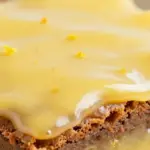
Lemon Brownies
Ingredients
- 1 cup (2 sticks / 227 g) unsalted butter, melted 🧈
- 1 ¾ cups (350 g) light brown sugar, packed 🍯
- 3 large eggs, room temperature 🥚
- ¼ cup (61 g) fresh lemon juice 🍋
- 1 teaspoon lemon zest 🍋
- 2 ½ cups (312.5 g) all-purpose flour 🌾
- 2 teaspoons cornstarch 🌽
- 1 teaspoon baking powder 🧁
- ½ teaspoon kosher salt 🧂
- Optional glaze — 1 cup (125 g) confectioners’ sugar (powdered sugar) 🍚
- Optional glaze — 2 tablespoons lemon juice (or water for milder flavor) 💧🍋
Instructions
- Preheat oven to 350°F (175°C). Line a 9×9-inch (23×23 cm) pan with parchment paper, leaving an overhang for easy removal, or lightly grease and flour the pan.
- In a large bowl, whisk together the melted butter and light brown sugar until smooth and well combined.
- Add the eggs one at a time, mixing well after each addition so the batter becomes glossy and even.
- Stir in the ¼ cup fresh lemon juice and the lemon zest until evenly distributed.
- In a separate medium bowl, whisk together the all-purpose flour, cornstarch, baking powder, and kosher salt.
- Gradually fold the dry ingredients into the wet mixture until just combined — be careful not to overmix.
- Spread the batter evenly into the prepared pan, smoothing the top with a spatula.
- Bake for 35–45 minutes, or until the edges are golden brown and a toothpick inserted near the center comes out with a few moist crumbs. (If using a 9×13-inch pan, bake 25–30 minutes — bars will be thinner.)
- Remove from the oven and allow the brownies to cool completely in the pan on a wire rack before glazing.
- Glaze (optional): In a medium bowl, whisk the confectioners’ sugar with 2 tablespoons lemon juice (or water for less lemon flavor) until smooth and pourable.
- Pour the glaze over the cooled brownies, spreading to the edges. Let the glaze set, about 15–20 minutes, then lift the brownies from the pan using the parchment overhang and cut into squares.
- Serve at room temperature. Store airtight for up to 3 days (refrigerate if glazed and kept longer).