
Vegan Meringue Cookies prove that you don’t need eggs to create light, airy, melt-in-your-mouth meringues. Made with aquafaba (the liquid from canned chickpeas), these delicate cookies have the same crisp shell and sweet snap as traditional meringues—without any animal products.
Perfect for vegans, those with egg allergies, or anyone curious about plant-based baking, vegan meringue cookies are elegant, low-fat, naturally gluten-free, and surprisingly easy to make. They’re ideal for holidays, tea parties, dessert tables, and edible gifts.
What Is Aquafaba and Why It Works
Aquafaba is the starchy liquid found in canned or cooked chickpeas. When whipped, it behaves remarkably like egg whites because it contains proteins and carbohydrates that trap air.
Why aquafaba is perfect for meringues:
- Whips into stiff peaks
- Holds structure when baked
- Neutral flavor once sweetened
- Widely available and affordable
This discovery revolutionized vegan baking and made classic desserts accessible without compromise.
Why You’ll Love These Vegan Meringue Cookies
- 100% plant-based and egg-free
- Naturally gluten-free
- Light, crisp, and melt-in-your-mouth
- Low in fat
- Elegant and customizable
- Perfect for piping and decorating
They look fancy but require only a handful of ingredients.
Ingredients for Vegan Meringue Cookies
Core Ingredients
- ¾ cup aquafaba (liquid from canned chickpeas)
- ¾ cup granulated sugar
- ¼ teaspoon cream of tartar
- 1 teaspoon vanilla extract
Optional Flavorings
- Peppermint extract
- Almond extract
- Lemon or orange extract
Optional Decorations
- Food coloring (gel preferred)
- Cocoa powder
- Freeze-dried fruit powder
Why Cream of Tartar Is Important
Cream of tartar stabilizes the aquafaba foam, helping the meringue hold stiff peaks and maintain structure during baking. If unavailable, lemon juice or apple cider vinegar can be substituted in equal amount.
Step-by-Step Instructions
Step 1: Preheat and Prepare
Preheat oven to 210°F (100°C). Line baking sheets with parchment paper.
Step 2: Whip the Aquafaba
In a clean mixing bowl, beat aquafaba on medium-high speed for 5–7 minutes until it becomes white, foamy, and forms soft peaks.
Step 3: Add Stabilizer
Add cream of tartar and continue beating until slightly thicker.
Step 4: Gradually Add Sugar
Add sugar one tablespoon at a time while beating. This step is critical for smooth, glossy meringue.
Step 5: Whip to Stiff Peaks
Continue whipping for 5–8 minutes until stiff, glossy peaks form and the bowl can be turned upside down without movement.
Step 6: Add Flavoring
Gently mix in vanilla or other extracts. Add food coloring if desired.
Step 7: Pipe the Cookies
Transfer meringue to a piping bag fitted with a star or round tip. Pipe small swirls or kisses onto prepared baking sheets.
Step 8: Bake Low and Slow
Bake for 90–120 minutes, until cookies are dry and lift easily from parchment.
Step 9: Cool Completely
Turn off oven and let cookies cool inside with the door slightly ajar for at least 30 minutes.
Why Low-Temperature Baking Is Essential
Meringues don’t truly bake—they dry out. Low heat prevents browning while allowing moisture to evaporate slowly, resulting in crisp shells and airy interiors.
Texture: Crisp, Light, and Delicate
Properly made vegan meringues should be:
- Crisp on the outside
- Dry all the way through
- Light and airy
- Not sticky or chewy
Humidity can affect results, so bake on a dry day if possible.
Expert Tips for Perfect Vegan Meringues
- Use clean, grease-free bowls
- Add sugar slowly for stability
- Whip long enough—aquafaba takes time
- Avoid humid conditions
- Cool gradually to prevent cracking
Flavor Variations
1. Chocolate Vegan Meringues
Fold in 1 tablespoon cocoa powder or drizzle with melted vegan chocolate.
2. Peppermint Meringue Cookies
Add ¼ teaspoon peppermint extract and red food coloring.
3. Lemon Vegan Meringues
Add lemon extract and finish with lemon zest.
4. Raspberry Swirl Meringues
Dust with freeze-dried raspberry powder.
5. Coffee Meringues
Add ½ teaspoon espresso powder dissolved in a few drops of water.
Serving Suggestions
- On holiday dessert platters
- With fresh berries
- As toppings for vegan pies
- With tea or coffee
- Packaged as edible gifts
They also make beautiful decorations for cakes and cupcakes.
Storage and Shelf Life
Room Temperature
Store in an airtight container for up to 7 days.
Avoid Refrigeration
Moisture will soften meringues.
Freezing
Not recommended—texture degrades after thawing.
Common Problems and Solutions
Meringue won’t whip: Aquafaba too diluted or bowl greasy
Sticky cookies: Underbaked or high humidity
Collapsed meringue: Sugar added too fast
Browned cookies: Oven temperature too high
Nutritional Notes
Vegan meringue cookies are:
- Fat-free
- Cholesterol-free
- Low-calorie per cookie
- Naturally gluten-free
They’re one of the lightest desserts you can make.
Frequently Asked Questions
Q1: Can I use homemade aquafaba?
Yes, as long as it’s reduced to a thick consistency.
Q2: Does it taste like chickpeas?
No—the flavor disappears once sweetened and baked.
Q3: Can I reduce the sugar?
Not recommended—sugar provides structure.
Q4: Can I make these without a mixer?
Very difficult—an electric mixer is strongly advised.
Q5: Are these safe for kids and allergies?
Yes, they’re egg-free and dairy-free.
Why This Vegan Meringue Recipe Works
- Stable aquafaba structure
- Proper sugar ratio
- Low, slow drying method
- Reliable texture and appearance
- Simple, accessible ingredients
This method consistently produces bakery-quality vegan meringues.
Conclusion
Vegan Meringue Cookies are proof that plant-based baking can be just as elegant, delicious, and impressive as traditional desserts. With their crisp texture, sweet flavor, and cloud-like appearance, these cookies are perfect for celebrations, gifting, or simply enjoying with a cup of tea.
Once you master aquafaba meringues, you’ll unlock a whole new world of vegan desserts.
Print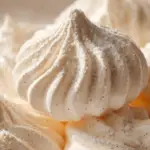
Vegan Meringue Cookies: Light, Crispy, and Perfectly Sweet Egg-Free Treats
Ingredients
• ¾ cup aquafaba (liquid from 1 can of unsalted chickpeas, not low-sodium—must be clear & viscous)
• ¼ tsp cream of tartar (stabilizes peaks)
• ½ cup powdered monk fruit–erythritol blend (must be ultra-fine or sifted—granulated won’t dissolve!)
• ½ tsp pure vanilla extract (or almond extract for variation)
• Pinch of sea salt
• Optional: ¼ tsp beet powder (pink), matcha (green), or cocoa (chocolate swirl)
Instructions
- Prep: Drain chickpeas, reserving exactly ¾ cup liquid. Chill bowl and beaters 10 min (cold = stiffer peaks!).
- Pour aquafaba into chilled bowl. Add cream of tartar and salt. Beat on high 8–12 min until stiff, glossy peaks form (like shaving cream). Tip bowl—nothing slides!
- Gradually add powdered sweetener, 1 tbsp at a time, beating 1–2 min between additions.
- Mix in vanilla (and optional color/flavor). Beat 1 more min until smooth and shiny.
- Pipe or spoon 1.5-inch rounds onto parchment-lined sheets (no greasing!). For chocolate swirl: dollop cocoa paste in bag before filling.
- Bake at 210°F (100°C) for 1.5–2 hours—low and slow dries them without browning. They’re done when crisp outside, dry inside (no stick when lifted).
- Turn off oven, crack door, and let cool inside 1 hour (prevents collapse).
PREP TIME & NUTRITION :
Prep Time: 20 min (+10 min chill) | Cook Time: 1 hr 45 min | Total Time: 2 hr 15 min | Servings: 24 cookies
Calories: 10 | Net Carbs: 0.5g | Fats: 0g | Protein: 0.5g