
Classic hummus is one of the most iconic Middle Eastern dishes, loved worldwide for its creamy texture, nutty flavor, and incredible versatility. Made from chickpeas, tahini, lemon juice, garlic, and olive oil, hummus is simple in ingredients yet deeply satisfying when prepared correctly.
While store-bought versions are convenient, nothing compares to homemade classic hummus—silky smooth, fresh-tasting, and customizable to your exact preferences. This comprehensive guide will teach you how to make authentic hummus at home, explain the role of each ingredient, and share expert tips for achieving restaurant-quality results every time.
What Is Classic Hummus?
Hummus is a traditional Middle Eastern dip or spread made primarily from cooked chickpeas (garbanzo beans) blended with tahini (sesame paste), lemon juice, garlic, olive oil, and salt. Its origins trace back centuries to the Levant region, where it remains a staple served with warm pita bread, fresh vegetables, and grilled meats.
Classic hummus is prized for its:
- Ultra-creamy texture
- Balanced tanginess
- Nutty sesame flavor
- Savory depth
When made properly, hummus should be smooth, light, and luxurious—not grainy or overly thick.
Why Make Homemade Hummus?
Homemade hummus offers clear advantages over packaged versions:
- Fresher flavor and aroma
- No preservatives or stabilizers
- Adjustable garlic, lemon, and tahini levels
- Smoother texture
- Lower cost
- Healthier, whole-food ingredients
Once you master the technique, hummus becomes one of the easiest and most rewarding recipes to prepare.
Ingredients for Classic Hummus
Core Ingredients
- 1½ cups cooked chickpeas (or 1 can, drained)
- ¼ cup tahini
- 3 tablespoons fresh lemon juice
- 1–2 cloves garlic
- ½ teaspoon salt
- 2–4 tablespoons ice-cold water
- 2 tablespoons extra-virgin olive oil
Optional Garnishes
- Olive oil drizzle
- Paprika or cumin
- Whole chickpeas
- Fresh parsley
The Importance of Tahini in Hummus
Tahini is the backbone of authentic hummus. It provides:
- Creaminess
- Nutty richness
- Depth of flavor
Use high-quality, well-stirred tahini made from 100% sesame seeds. Bitter or old tahini will negatively affect the final result.
Chickpeas: Canned vs Dried
Canned Chickpeas
- Convenient and consistent
- Excellent results when prepared properly
Dried Chickpeas
- Superior flavor and texture
- Require soaking and cooking
- Traditional choice
Pro Tip: Whether canned or dried, removing the chickpea skins dramatically improves smoothness.
Step-by-Step Instructions
Step 1: Prepare the Chickpeas
If using canned chickpeas, drain and rinse well. For extra-smooth hummus, simmer them in water with ½ teaspoon baking soda for 15–20 minutes, then rinse thoroughly and remove loose skins.
Step 2: Blend Tahini and Lemon
In a food processor, blend tahini and lemon juice for 1 minute until thick and creamy. This step aerates the tahini and creates a light texture.
Step 3: Add Garlic and Salt
Add garlic and salt. Blend for 30 seconds, scraping down the sides as needed.
Step 4: Add Chickpeas
Add chickpeas gradually, blending for 2–3 minutes until thick and smooth.
Step 5: Adjust Texture
With the processor running, add ice-cold water one tablespoon at a time until the hummus becomes light, fluffy, and silky.
Step 6: Finish with Olive Oil
Drizzle in olive oil and blend briefly. Taste and adjust seasoning.
How to Achieve Ultra-Smooth Hummus
- Peel chickpeas
- Blend tahini and lemon first
- Use ice-cold water
- Blend longer than you think
- Use a powerful food processor
These steps transform hummus from grainy to luxurious.
Flavor and Texture Profile
Perfect classic hummus should be:
- Pale, creamy, and smooth
- Light and fluffy, not dense
- Balanced between lemon, tahini, and garlic
- Savory without bitterness
Common Hummus Mistakes (and Fixes)
Grainy texture: Chickpeas not peeled or under-blended
Bitter flavor: Poor-quality tahini
Too thick: Add cold water gradually
Too sour: Reduce lemon juice
Flat taste: Needs salt or olive oil
Traditional Serving Style
Classic hummus is traditionally served:
- Spread in a shallow bowl
- Swirled with the back of a spoon
- Drizzled generously with olive oil
- Garnished simply
It’s meant to be shared and enjoyed communally.
Ways to Serve Classic Hummus
Hummus is incredibly versatile:
- With warm pita bread
- As a vegetable dip
- In wraps and sandwiches
- Alongside falafel
- As a spread for toast
- With grilled meats
- In mezze platters
Healthy Benefits of Hummus
Classic hummus is:
- Plant-based
- High in fiber
- Rich in protein
- Gluten-free
- Dairy-free
- Heart-healthy
It’s a satisfying, nutrient-dense food suitable for many diets.
Storage and Shelf Life
Refrigerator
Store hummus in an airtight container for up to 5 days.
Freezing
Possible, but texture may change slightly. Stir well after thawing.
Refreshing Leftover Hummus
Stir in a tablespoon of water or olive oil before serving.
Classic Hummus Variations (Optional)
- Roasted garlic hummus
- Cumin-spiced hummus
- Extra-lemony hummus
- Olive oil–rich hummus
- Paprika-infused hummus
These variations stay close to the classic flavor profile.
Frequently Asked Questions
Q1: Can I make hummus without tahini?
Yes, but it will not be authentic or as creamy.
Q2: Why is my hummus bitter?
Tahini quality is usually the cause.
Q3: Should hummus be thick or thin?
Smooth and spreadable—not stiff.
Q4: Can I use a blender?
Yes, but a food processor works best.
Q5: Is hummus vegan?
Yes—traditional hummus is fully plant-based.
Why This Classic Hummus Recipe Works
- Proper ingredient order
- Balanced ratios
- Authentic method
- Simple, whole foods
- Consistently smooth results
This recipe delivers hummus the way it’s meant to be enjoyed.
Conclusion
Classic hummus is a timeless recipe that proves simplicity is powerful. With just a handful of ingredients and the right technique, you can create creamy, authentic hummus that rivals the best restaurants.
Once you make it at home, it becomes a staple you’ll return to again and again.
Print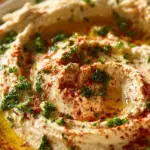
Classic Hummus: Creamy, Authentic, and Perfectly Balanced
Ingredients
• 1 cup dried chickpeas (or 2 cups cooked)
• ½ tsp baking soda (for ultra-creamy texture—key secret!)
• ⅓ cup well-stirred tahini (high quality—look for just sesame + salt!)
• 3 tbsp fresh lemon juice
• 2 garlic cloves, grated or minced
• 2–3 tbsp ice-cold water (for fluffiness)
• 2 tbsp extra-virgin olive oil (plus more for drizzling)
• ½ tsp sea salt
• Optional: pinch of ground cumin or smoked paprika
BONUS TIP: For canned-chickpea shortcut: Use 2 (15 oz) cans—drain, rinse, then simmer 20 min with ½ tsp baking soda in fresh water. Drain and peel skins (optional but yields silkier texture).
Instructions
- Cook chickpeas (best method): Soak dried chickpeas overnight in 3x water + ½ tsp baking soda. Drain, rinse, cover with fresh water + remaining ½ tsp baking soda. Simmer 45–60 min until very tender (mash easily between fingers). Drain, reserving ¼ cup cooking liquid.
- In a food processor, blend tahini and lemon juice 1 min until whipped and pale.
- Add garlic and salt; blend 30 sec.
- Add warm chickpeas and olive oil. Blend 3–4 min, scraping sides, until ultra-smooth.
- With motor running, drizzle in 2 tbsp ice water (and a splash of reserved cooking liquid if needed) until light, fluffy, and glossy.
- Taste: adjust lemon (brightness), salt (depth), or cumin (earthiness).
- Serve in a shallow bowl, swirled with olive oil, a dusting of paprika, and parsley.
PREP TIME & NUTRITION :
Prep Time: 15 min (+overnight soak) | Cook Time: 50 min | Total Time: ~24 hrs (mostly passive)
Servings: 8 (¼-cup)
Calories: 180 | Net Carbs: 8g | Fats: 12g | Protein: 6g