
Introduction
Welcome to your new go-to comfort pasta.
This is my take on the Classic Spaghetti Carbonara — a deceptively simple Italian dish that lands every time because it leans on technique rather than fuss. What feels indulgent is really the result of mastering temperature and timing: eggs and cheese transform into a satiny sauce when coaxed correctly, and crisped bacon provides the savory contrast that keeps each bite interesting.
As a food writer who tests dozens of recipes, I love recommending carbonara because it demonstrates how modest pantry ingredients can become something extraordinary with the right method. It’s a lesson in restraint: no cream, no heavy sauces, just eggs, cheese, cured pork, and pasta water working together.
In the paragraphs that follow I’ll walk you through why this version works, how the textures should read on your plate, and the tiny gestures that prevent scrambled eggs and ensure a glossy coating on every strand. Whether you’re cooking for one or entertaining a few friends, this recipe scales with confidence and rewards attention to a few key moments at the stove.
Let’s make carbonara that feels restaurant-worthy but is utterly home-friendly.
Why You’ll Love This Recipe
Flavor-first, comfort-forward.
This carbonara delivers a concentrated savory profile that comes from a few high-impact components working in harmony. Crisped bacon contributes pockets of smoky fat and crunchy texture, while the cheese blend offers both salty tang and a mouth-coating umami richness. The egg mixture—when tempered and emulsified properly—creates a luxuriously smooth sauce that clings to each strand of pasta rather than pooling at the bottom of the bowl.
What sets this version apart is how it balances immediacy and finesse. It cooks quickly, making it perfect for weeknights, but asks you to pay special attention to temperature so the final texture remains silky, not curdled. You’ll also appreciate the layered seasoning: a small amount of pasta water lifts the dish and integrates flavors without watering down the cheese, while a finish of freshly cracked black pepper adds aromatic heat and a faint citrusy bite.
Finally, this recipe is forgiving and adaptable. Swap bacon for guanciale for a more traditional profile or add a touch of lemon zest for brightness—small changes work because the foundation is sound. It’s the kind of recipe that rewards curiosity.
Flavor & Texture Profile
What you should taste and feel in every forkful.
The ideal carbonara is an interplay of silk and snap: smooth, clingy sauce wrapped around al dente pasta, interrupted by crunchy, caramelized bits of cured pork. The cheese duo contributes layered salty and nutty notes—Pecorino Romano gives a sharper, sheep-milk tang while Parmesan rounds things out with mellow umami. Eggs act as the binder and create that iconic glossy finish when handled correctly.
Texturally, aim for these contrasts:
- Al dente spaghetti with a little bite at the center.
- Velvety sauce that coats rather than pools.
- Crunchy bacon that provides tension against the creaminess.
Temperature plays a key role: too hot and the eggs scramble, producing grainy curds; too cool and the sauce won’t emulsify and cling. The trick is to remove the pan from direct heat when adding the egg-cheese mixture and to use reserved starchy pasta water to coax the sauce into a silky emulsion.
Finally, aromatics are modest but important: quick-sautéed garlic in rendered bacon fat offers a fleeting savory scent, while cracked black pepper gives aromatic lift that brightens the dense flavors. When done right, carbonara feels both elegant and deeply comforting.
Gathering Ingredients
Assemble everything before you start—mise en place is the secret to success here.
This section lists the full ingredient set you’ll use so you can move confidently through the cooking steps without scrambling to measure mid-recipe. Having bowls for the egg-and-cheese mixture, a cup for reserved pasta water, and a plate lined with paper towels for drained bacon will keep the flow smooth.
- 1 teaspoon salt (for the pasta water)
- 8 oz (about 225 g) uncooked spaghetti
- Water for boiling
- 1 tablespoon olive oil
- 8 slices thick-cut bacon, diced
- 3 egg yolks
- 1 whole egg
- 1/2 cup grated Parmesan (plus extra for garnish)
- 1/2 cup grated Pecorino Romano
- 1 tablespoon minced garlic
- 1/2 teaspoon salt
- 1 teaspoon freshly ground black pepper
- 2 tablespoons fresh chopped parsley (optional, for garnish)
Small practical notes: use a sturdy skillet that can hold the pasta comfortably and retain heat; a heatproof bowl for whisking eggs and cheese is helpful for tempering; and warm, reserved pasta water should be accessible near the stove. Having everything staged saves time and protects texture.
Preparation Overview
A quick roadmap before you light the stove.
The rhythm of carbonara is straightforward but precise: cook the pasta until it still has a bite, render and crisp the bacon to build fat and flavor, combine eggs and cheese into a cohesive mixture, and use hot starchy pasta water to turn the egg-cheese into a glossy emulsion that clings to the pasta. Preparing elements ahead—the whisked egg-and-cheese, a bowl for the reserved pasta water, and crisped bacon on a paper towel—lets you move quickly when the critical moment arrives.
One of the most important preparations is deciding where you’ll finish the sauce: off-heat in the skillet while the warm pasta and a splash of pasta water are present. That short off-heat period prevents direct contact between high heat and egg, eliminating the risk of scrambling while still using heat to gently thicken the sauce.
Also, plan for continuous motion when combining: a steady toss or stir helps the egg-and-cheese adopt a smooth texture. If the sauce seems too thick or tight, add reserved pasta water in small increments until you achieve a satiny sheen. These small preparations transform a good pasta into a great one.
Cooking / Assembly Process
Step-by-step instructions for reliably silky carbonara.
1. Bring a large pot of water to a rolling boil. Add 1 teaspoon salt, then cook the spaghetti according to package instructions until al dente. Reserve 3 cups of the pasta cooking water, then drain the pasta and set aside.
2. Heat a large heavy skillet over medium heat. Add 1 tablespoon olive oil, then the diced bacon. Sauté until the bacon is crisp and golden. Use a slotted spoon to transfer the bacon to a paper-towel-lined plate, leaving the bacon fat in the skillet.
3. In a medium bowl, whisk together 3 egg yolks, 1 whole egg, 1/2 cup grated Parmesan and 1/2 cup grated Pecorino Romano until smooth. Set the egg-and-cheese mixture aside.
4. Lower the skillet heat to medium-low. Add 1 tablespoon minced garlic to the reserved bacon fat and sauté briefly (30–60 seconds) until fragrant, being careful not to brown the garlic.
5. Pour 1 1/2 cups of the reserved hot pasta water into the skillet to deglaze, stirring and scraping any browned bits from the bottom. This will create a flavorful base for the sauce.
6. Temper the egg mixture by very slowly whisking 1/2 cup of the hot pasta water into the eggs while whisking constantly. This raises the egg temperature gently and prevents scrambling.
7. Add the drained spaghetti to the skillet and toss to combine with the garlic and deglazing liquid. Remove the skillet from the heat, then quickly pour in the tempered egg-cheese mixture and add the crispy bacon. Stir continuously until the sauce becomes creamy and clings to the pasta, adding more reserved pasta water a splash at a time to reach a silky consistency.
8. Taste and adjust seasoning with additional salt or black pepper if needed. Serve immediately, sprinkled with extra grated Parmesan and chopped parsley if desired.
Serving Suggestions
Simple finishes that elevate the final bowl.
Carbonara is best enjoyed immediately while the sauce is at its silkiest. Consider these serving gestures: grate a little extra hard cheese over the top for added richness; crack a generous amount of fresh black pepper for aromatics and bite; scatter chopped fresh parsley for a herbaceous contrast and color. For a bit of textural drama, reserve a handful of bacon pieces and sprinkle them on top just before serving so their crispness remains distinct.
Pairings: a bright, acidic salad or quick lemon-y arugula salad helps cut through the dish’s richness, while a crisp white wine with good acidity will keep the palate refreshed. If you prefer non-alcoholic options, a sparkling water with a twist of citrus or a cold, lightly sweetened iced tea complements the savory profile nicely.
Presentation: serve straight from the skillet or toss and portion into warmed bowls so the sauce stays glossy longer. Avoid letting the pasta sit too long; the sauce will tighten as it cools. Small finishing touches make a big difference in enjoyment.
Storage & Make-Ahead Tips
How to handle leftovers and what to prep ahead.
Carbonara is at its peak right off the stove; leftover sauce tends to thicken and may separate when reheated. If you anticipate leftovers, store the pasta in an airtight container in the refrigerator for up to 2 days. When reheating, do so gently: warm a little broth or water in a skillet, add the pasta, and toss over low heat while adding small amounts of liquid to coax the sauce back toward a silkier consistency. Avoid high heat and microwaving directly as that increases the chance of the eggs tightening into curds.
Make-ahead prep that works well: grate cheeses and store them in the fridge; crisp the bacon and keep it on a paper towel-lined plate in the refrigerator, reheating briefly to restore crunch; whisk the egg-and-cheese mixture and keep it chilled until needed, but bring it closer to room temperature before tempering to reduce shock when adding hot liquid.
If you need a longer-term option, freeze only the plain cooked pasta (without the egg sauce) for up to one month and reheat with a fresh egg-and-cheese emulsion when ready to serve. Thoughtful reheating preserves texture and flavor.
Frequently Asked Questions
Answers to common carbonara conundrums.
- Can I use cream to make carbonara creamier? Traditional carbonara relies on eggs and pasta water for creaminess; cream changes the dish’s character. If you prefer a looser sauce, add pasta water little by little rather than cream.
- What can I use instead of bacon? Guanciale is the classic choice and will provide a deeper, porky flavor. Pancetta is a good substitute; smoked bacon will add more smokiness.
- How do I prevent the eggs from scrambling? Temper the eggs by slowly whisking in hot pasta water, remove the skillet from direct heat before adding the egg mixture, and stir continuously to create an emulsion.
- Can I make carbonara ahead for guests? You can prep components ahead—grate cheese, crisp bacon, warm water for the pasta—but finish the eggs with the pasta just before serving for the best texture.
If you have a specific question about substitutions, dietary adjustments, or troubleshooting a particular texture issue, ask away and I’ll share targeted tips to help you get the perfect silky finish every time.
Print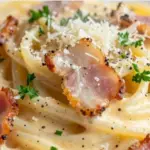
Classic Spaghetti Carbonara
Ingredients
- 1 teaspoon salt (for the pasta water) 🧂
- 8 oz (about 225 g) uncooked spaghetti 🍝
- Water for boiling 💧
- 1 tablespoon olive oil 🫒
- 8 slices thick-cut bacon, diced 🥓
- 3 egg yolks 🥚
- 1 whole egg 🥚
- 1/2 cup grated Parmesan (plus extra for garnish) 🧀
- 1/2 cup grated Pecorino Romano 🧀
- 1 tablespoon minced garlic 🧄
- 1/2 teaspoon salt 🧂
- 1 teaspoon freshly ground black pepper 🌶️
- 2 tablespoons fresh chopped parsley (optional, for garnish) 🌿
Instructions
- Bring a large pot of water to a rolling boil. Add 1 teaspoon salt, then cook the spaghetti according to package instructions until al dente. Reserve 3 cups of the pasta cooking water, then drain the pasta and set aside.
- Heat a large heavy skillet over medium heat. Add 1 tablespoon olive oil, then the diced bacon. Sauté until the bacon is crisp and golden. Use a slotted spoon to transfer the bacon to a paper-towel-lined plate, leaving the bacon fat in the skillet.
- In a medium bowl, whisk together 3 egg yolks, 1 whole egg, 1/2 cup grated Parmesan and 1/2 cup grated Pecorino Romano until smooth. Set the egg-and-cheese mixture aside.
- Lower the skillet heat to medium-low. Add 1 tablespoon minced garlic to the reserved bacon fat and sauté briefly (30–60 seconds) until fragrant, being careful not to brown the garlic.
- Pour 1 1/2 cups of the reserved hot pasta water into the skillet to deglaze, stirring and scraping any browned bits from the bottom. This will create a flavorful base for the sauce.
- Temper the egg mixture by very slowly whisking 1/2 cup of the hot pasta water into the eggs while whisking constantly. This raises the egg temperature gently and prevents scrambling.
- Add the drained spaghetti to the skillet and toss to combine with the garlic and deglazing liquid. Remove the skillet from the heat, then quickly pour in the tempered egg-cheese mixture and add the crispy bacon. Stir continuously until the sauce becomes creamy and clings to the pasta, adding more reserved pasta water a splash at a time to reach a silky consistency.
- Taste and adjust seasoning with additional salt or black pepper if needed. Serve immediately, sprinkled with extra grated Parmesan and chopped parsley if desired.