
Introduction
Comforting Creamy Chicken Noodle Soup
This recipe is the kind of bowl you reach for when the weather turns gray and you want something that feels like a warm embrace. As a professional food writer I think about balance: how a silky broth, tender protein, and springy noodles can come together to deliver both nourishment and joy. This introduction sets the scene, not to list measurements or steps, but to invite you into the experience of making something reliably soothing.
I always emphasize technique and feeling over rigid rules. When I describe this soup in my kitchen notes I focus on layering aromas early, coaxing sweetness from softened aromatics, and finishing with a delicate ribbon of cream for silk on the tongue. The goal is a bowl that comforts without weighing you down, that carries the aroma of home and a texture that comforts with every spoonful.
In the paragraphs that follow you’ll find guidance on why the recipe works, how to think about textures, and smart preparation strategies that preserve brightness and depth. Expect practical tips, plating notes, and troubleshooting advice written in a friendly, experienced voice so you can make the soup confidently and lovingly.
Why You’ll Love This Recipe
Why this soup becomes an instant favorite
There are soups that feel utilitarian and soups that feel like a small celebration; this one sits happily between both. What makes it so lovable is the combination of immediate comfort and a surprisingly sophisticated mouthfeel. The cream adds a velvety finish without hiding the bright, savory notes from the aromatics and herbs. You’ll appreciate a few things especially:
- The emotional comfort: it evokes childhood warmth but with grown-up seasoning.
- The convenience: it comes together quickly, making it ideal for weeknights or when you want nourishing food with minimal fuss.
- The adaptability: it takes well to small swaps that match what’s already in your pantry or fridge.
I write recipes for busy cooks who still crave depth. This soup rewards simple attentions—softening vegetables gently, blooming dried herbs briefly, and adding cream just at the end—so the final bowl feels layered rather than cloying. If you enjoy food that comforts without being heavy-handed, this one will become a repeat in your rotation.
Flavor & Texture Profile
What to expect on the palate and why each element matters
This soup balances three broad sensations: savory body, gentle sweetness, and creamy silk. The savory backbone comes from the stock and the cooked protein; the aromatics and softened vegetables contribute a gentle sweetness that keeps the broth lively rather than flat; and the cream introduces a soft, luxurious mouthfeel that feels indulgent but subtle.
On texture, aim for contrast. Here are the textural conversations you want to cultivate:
- Tender but distinct vegetables—softened enough to be comforting, not dissolved into the broth.
- Noodles that are al dente to slightly tender—offering a slight chew so the bowl doesn’t become uniformly soft.
- Shredded chicken that remains juicy and fibrous, creating small bites amid the broth.
Texture is achieved by timing: avoid overcooking the noodles and finish the cream gently to preserve its silk without breaking. For flavor depth, allow aromatics to sweat rather than brown aggressively; this technique extracts their sweetness while keeping the broth clear and nuanced. A final sprinkle of fresh herbs adds a pop of brightness that lifts the creamy backdrop and keeps the bowl from feeling heavy.
Gathering Ingredients
Ingredients checklist — gather these before you start
Below is the complete ingredient list used by the recipe. Having everything measured and ready simplifies the process and helps you focus on technique once you begin.
- 2 tablespoons olive oil
- 1 medium onion, chopped
- 2 carrots, sliced
- 2 celery stalks, sliced
- 3 cloves garlic, minced
- 1 teaspoon dried thyme
- 1 teaspoon dried rosemary
- 6 cups chicken broth
- 2 cups cooked chicken, shredded
- 1 cup egg noodles
- 1 cup heavy cream
- Salt and pepper to taste
- Fresh parsley, chopped (for garnish)
It helps to rinse and pat dry any fresh produce, have your measuring tools at hand, and set aside the shredded chicken so it’s easy to drop into the pot. If you choose to substitute or adapt, think about equivalent textures and flavors rather than replacing blind: for instance, a different pasta shape will change how the noodles sit in the broth; fresh herbs can brighten but may need gentler timing than dried.
This section also includes a visual guide: the accompanying flat-lay image shows all ingredients arranged and visible so you can confirm you have everything before beginning.
Preparation Overview
How to approach the cook with calm and control
Before you light the stove, take a moment to visualize the rhythm of the cooking. This dish rewards a measured pace: gentle sautéing to unlock sweetness, a measured simmer to infuse flavor, and a restrained finish with cream so the broth remains silky. Think of the process as three phases—aromatics, simmering, and finishing—and plan your mise en place accordingly.
Start by prepping your vegetables and aromatics so everything is within reach. Use a heavy-bottomed pot to ensure even heat distribution; this reduces the chance of hot spots and helps vegetables soften evenly. When you heat the fat, avoid high flames—medium heat coax the aromatics to release flavors without scorching.
During simmering, maintain a gentle rolling motion rather than an aggressive boil. This keeps the stock clear and allows the noodles to cook evenly. Introduce the protein later so it warms through without drying. Finally, when adding the cream, temper it gently to avoid curdling: a brief warming and a slow incorporation will produce a unified texture rather than a broken sauce.
This overview is about rhythm and attention more than rigid timing. If you keep a steady, attentive approach the bowl you serve will feel cohesive, balanced, and deeply satisfying.
Cooking / Assembly Process
Step-by-step instructions to bring the soup together
Follow these steps in order for a smooth cook. The goal is clarity and timing so the textures align at the finish. Keep a wooden spoon and a ladle handy, and taste as you go to adjust seasoning.
- Heat the oil in a large pot over medium heat.
- Add chopped onion, sliced carrots, and sliced celery; sauté until softened, about a few minutes.
- Stir in minced garlic, dried thyme, and dried rosemary; cook briefly until fragrant.
- Pour in the chicken broth and bring to a boil.
- Once boiling, add the shredded cooked chicken and egg noodles; reduce heat and simmer until the noodles are tender.
- Stir in the heavy cream and season with salt and pepper; heat through gently without vigorous boiling.
- Ladle into bowls and garnish with chopped fresh parsley before serving.
A few professional tips while you’re at the stove: monitor the noodles during simmering since different shapes and brands cook at different rates; if the broth reduces too quickly, add a splash of extra stock. After adding cream, keep the heat low—just enough to warm—because boiling can break the emulsion and dull the freshness of the aromatics. Taste for seasoning at the end and adjust with salt, pepper, or a squeeze of lemon if you want brightness.
The companion image shows the pot mid-cooking, capturing visible action, tools, and early texture changes rather than a finished plated bowl.
Serving Suggestions
How to present and pair this soup for the best experience
Serving is where small details make the soup feel special. Think beyond just the bowl: texture contrast, temperature balance, and aromatic finishes elevate the experience. A scattering of fresh herbs adds a bright counterpoint to the creamy base, and a crack of black pepper provides a warm bite that cuts through the richness.
For accompaniments, consider crunchy or acid-driven elements to complement the silky broth. A crisp bread, warm buttered roll, or a simple green salad dressed with vinaigrette will round the plate and provide contrast. If you like a hint of acid, a wedge of lemon or a light drizzle of apple-cider vinegar can brighten the bowl without overpowering it.
Serving temperatures matter: serve hot but not scalding so the cream’s texture is appreciated and eaters can taste the full range of flavors. If you’re presenting for guests, keep garnishes separate and let each person finish their bowl with parsley or extra pepper to taste. For a cozy family meal, serve family-style from the pot with bowls warmed in advance to preserve the soup’s comforting heat.
Storage & Make-Ahead Tips
Smart ways to store, reheat, and prepare parts ahead
This soup is forgiving when it comes to make-ahead strategies, but a few guidelines will keep texture and flavor at their best. If you plan to refrigerate leftovers, separate denser components from delicate ones when possible. For example, storing noodles separately will help avoid a mushy texture after chilling. Likewise, if you plan to freeze portions, omit the cream and add it when reheating so the mouthfeel stays fresh.
When reheating, do so gently: bring the soup to a low simmer and stir frequently to reunite flavors without overcooking any remaining noodles or breaking the cream. If the broth has thickened in the fridge, thin with a splash of stock or water and re-season to taste. For make-ahead convenience, you can prepare the aromatic base and stock up to a day before, refrigerate it, then bring it up to temperature and add cooked protein and noodles at service time.
Label containers with dates and avoid keeping refrigerated leftovers more than a few days for best quality. If you find the texture changes after chill/reheat, small adjustments like adding a fresh handful of cooked noodles or a finishing drizzle of cream can freshen the bowl and restore appealing mouthfeel.
Frequently Asked Questions
Common questions and concise answers
- Can I use rotisserie chicken?
Yes—pre-cooked chicken is a convenient option and works well to speed the process. - Can I swap the heavy cream?
You can use lighter dairy or dairy alternatives, but they will change texture; add them gently and don’t boil vigorously afterward. - How do I prevent noodles from getting mushy?
Cook them until just tender and consider adding them toward the end or storing them separately if making ahead. - Can I make this gluten-free?
Yes—substitute gluten-free noodles or use a rice or spiralized vegetable to keep the spirit of the bowl.
If you have other questions—about seasoning adjustments, substituting proteins, or scaling the recipe—I’m happy to help with tailored suggestions. The last tip: trust your palate and keep small tools like a wooden spoon and ladle at the ready; they make an attentive cook look effortless.
Print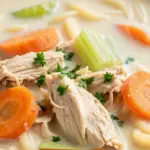
Comforting Creamy Chicken Noodle Soup
Ingredients
- 2 tablespoons olive oil 🫒
- 1 medium onion, chopped 🧅
- 2 carrots, sliced 🥕
- 2 celery stalks, sliced 🌿
- 3 cloves garlic, minced 🧄
- 1 teaspoon dried thyme 🌱
- 1 teaspoon dried rosemary 🌿
- 6 cups chicken broth 🍗
- 2 cups cooked chicken, shredded 🍗
- 1 cup egg noodles 🍜
- 1 cup heavy cream 🥛
- Salt and pepper to taste 🧂⚫️
- Fresh parsley, chopped (for garnish) 🌿
Instructions
- Heat the olive oil in a large pot over medium heat.
- Add the chopped onion, sliced carrots and sliced celery. Sauté about 5 minutes, until the vegetables are softened.
- Stir in the minced garlic, dried thyme and dried rosemary; cook 1 more minute until fragrant.
- Pour in the chicken broth and bring to a boil.
- Once boiling, add the shredded chicken and egg noodles. Reduce heat and simmer about 10 minutes, until the noodles are tender.
- Stir in the heavy cream and season with salt and pepper to taste. Heat through for another 3–5 minutes, stirring occasionally — do not boil hard after adding the cream.
- Ladle into bowls, garnish with chopped fresh parsley, serve hot and enjoy!