
Introduction
A cozy one‑pan supper that feels like a warm hug.
As a professional food writer I gravitate toward dinners that balance comfort and speed, and this skillet is a perfect example. The dish brings together straightforward pantry ingredients and a comforting, creamy sauce into a single skillet for minimal fuss and maximal payoff. I love how it layers simple techniques—browning, gentle simmering, and a brief finish under melted cheese—to build depth without complicated steps.
What makes this kind of recipe sing on weeknights is its forgiving nature: it adapts to what you already have, scales for a family, and delivers that irresistible combination of creamy sauce, tender pasta, and melty cheese. In this introduction I’ll set the scene for the rest of the article—expect practical tips on ingredient choices, texture cues to watch for, and ideas to elevate the finished skillet without changing the recipe’s heart.
I’ll avoid repeating the exact ingredient quantities or step-by-step directions here; those live in the structured sections below. Instead, I’ll focus on mindset and sensory cues—how the sauce should look as it simmers, what aromas indicate readiness, and how to keep the dairy rich without breaking. Come along and I’ll share small professional touches that make this approachable skillet feel intentionally crafted every time.
Why You’ll Love This Recipe
Reasons this skillet becomes a weeknight favorite.
I write recipes for busy people who still want delicious results, and this skillet hits that sweet spot. It’s a one-pan experience that reduces both active time and cleanup, so you can focus on family or finish other tasks while dinner finishes itself. The combination of beef and shell pasta offers satisfying heft, while the creamy sauce and melted mozzarella bring that indulgent, comfort-food finish everyone requests.
Beyond convenience, this dish is versatile. It welcomes little tweaks: a quick sauté of extra vegetables for added color and nutrition, a splash of acid to brighten the sauce, or a finishing herb flourish to lift the richness. It’s forgiving in technique, too—if the sauce thickens faster, a spoonful of broth loosens it; if it seems thin, a few extra minutes over gentle heat helps it concentrate.
Finally, it’s family-friendly in flavor and texture. Most palates love creamy, cheesy pastas, and the bite of large shells provides a pleasant contrast to the silky sauce. If you’re feeding varied appetites, this skillet pairs well with bright sides and keeps beautifully for leftovers, making it a true weekday workhorse.
Flavor & Texture Profile
What to expect on the plate (and why it’s so satisfying).
This skillet delivers layers of flavor that work together: savory browned beef gives the dish a meaty backbone, while the tomatoes add subtle acidity and sweetness that keep the cream from feeling heavy. The Italian seasoning threads herbaceous notes through the sauce, and a finishing scatter of parsley adds a fresh, peppery lift.
On texture, the contrast is what makes each bite interesting: the large pasta shells hold sauce in their curves, providing pockets of cream and tomato with every forkful. The beef should be in small crumbles, tender but with a slight chew, offering substance between the pillowy pasta textures. The sauce itself sits between velvety and saucy—rich from the cream but not cloying thanks to the bright tomato and broth balance.
Small finishing details matter: let the sauce come to a gentle simmer so it reduces and coats the shells rather than separating or thinning. When you add the cheese, cover the skillet just until the mozzarella melts—this keeps the cheese glossy and stringy without overworking it into the sauce. A final sprinkle of chopped parsley provides a visual contrast and a fresh herbal note that cuts through the richness, making the dish feel complete and balanced.
Gathering Ingredients
Assemble everything before you start for smooth, confident cooking.
Mise en place is especially helpful for a one‑pan meal: have your aromatics prepped, the dairy measured, and the pasta cooked and ready to go. In this section I list the ingredients so you can check your pantry and fridge before you begin. Once you’ve gathered these items, the skillet moves quickly and with fewer interruptions.
- 450g (1 lb) ground beef
- 225g (8 oz) large shell pasta
- 1 tbsp olive oil
- 1 onion, chopped
- 2 cloves garlic, minced
- 1 can (411g / 14.5 oz) diced tomatoes, undrained
- 240ml (1 cup) beef broth
- 240ml (1 cup) heavy cream
- 1 tsp Italian seasoning
- Salt and black pepper
- 100g (about 1 cup) shredded mozzarella cheese
- Fresh parsley, chopped
Plan your equipment too: a large pot for boiling the pasta and a wide, heavy skillet for browning and simmering will make the process seamless. Having a lid on hand for melting the cheese and a fine heat source to control the simmer will produce the best results.
Preparation Overview
A calm, organized approach keeps this one‑pan dish stress‑free.
Before heating the skillet, take a moment to ready each component. Cooking the pasta to the right doneness ahead of time removes one variable from the skillet stage and shortens active time at the stove. Prep the aromatics so they’re ready to go into the oil the moment the pan is hot. This is the point where you should also taste and adjust your seasoning plan: consider how salty the broth and cheese are, and account for that when salting.
Use a wide, heavy skillet that can comfortably hold the browned meat, sauce, and pasta without crowding. Browning the beef well develops caramelized bits that translate into savory depth in the sauce; don’t rush this step. When you add liquids, bring them together gently—avoid a rolling boil that risks toughening dairy or breaking the cream. Simmering slowly concentrates flavors and allows the tomatoes to integrate smoothly.
When combining pasta with the sauce, toss briefly over low heat so the shells pick up sauce without overcooking. Finish with the cheese and cover to melt—this brief holding step yields a glossy, melty finish without overworking the dairy. Small timing choices at each stage define the final texture, so move confidently and observe the visual cues described above.
Cooking / Assembly Process
Step-by-step instructions to execute the skillet with confidence.
- Bring a large pot of salted water to a boil. Cook the shell pasta according to package directions until al dente. Drain and set aside.
- While the pasta cooks, heat the olive oil in a large skillet over medium heat.
- Add the chopped onion and sauté 2–3 minutes until translucent. Add the minced garlic and cook 30–60 seconds until fragrant.
- Add the ground beef, breaking it up with a spatula. Cook 5–7 minutes until browned and no longer pink. Drain excess fat if needed.
- Stir in the diced tomatoes with their juice, beef broth, heavy cream, and Italian seasoning. Season with salt and pepper to taste.
- Bring the mixture to a gentle simmer and let it cook 4–5 minutes so the flavors meld and the sauce slightly thickens.
- Add the cooked shell pasta to the skillet and toss to combine, cooking 2–3 minutes more until heated through.
- Sprinkle the shredded mozzarella over the top, cover the skillet for a few minutes until the cheese melts.
- Garnish with chopped fresh parsley and serve hot.
These steps are written to align with common kitchen flow: prep, brown, combine, simmer, finish. Pay attention to visual and tactile cues—browning color, gentle simmer, and glossy melted cheese—rather than rushing. If you find the sauce too thin after simmering, lift the lid and cook a little longer; if it seems too thick, add a splash of broth to loosen. Let the skillet rest briefly if the cheese seems overly stringy when you first uncover; the sauce will settle and become silkier with a minute of rest.
Serving Suggestions
Simple accompaniments that complement rich, creamy pasta.
Because this skillet is rich and saucy, pairings that add brightness and texture work especially well. A crisp green salad with a bright vinaigrette cuts the creaminess and adds a refreshing crunch; ingredients like peppery arugula, thinly sliced fennel, or a handful of shaved radishes can provide contrast. For a warm side, garlic‑roasted broccoli or a tray of blistered cherry tomatoes lightly tossed with olive oil and sea salt offer color and vegetal notes that feel balanced against the beef and cheese.
If you’d like to lean into Italian flavors, offer lemon wedges for a finishing squeeze—acid wakes up the cream and lifts the palate. A sprinkle of grated Parmesan at the table adds a nutty umami boost for those who want more cheesiness. For bread lovers, a slice of crusty bread or garlic toast is ideal for soaking up any leftover sauce.
Keep garnishes simple and intentional: fresh parsley adds herbaceous brightness and color; crushed red pepper can add heat for diners who like a kick. Serve family-style from the skillet if you want a relaxed, communal vibe, or portion into warmed bowls for a cozier presentation. Either way, the goal is to balance the skillet’s richness with crisp, bright, or acidic elements that refresh the palate between bites.
Storage & Make-Ahead Tips
How to store, reheat, and make this skillet ahead with confidence.
This dish stores well and can be a weekday lifesaver when prepared in advance. Cool the skillet to near room temperature before transferring to airtight containers; this preserves texture and prevents condensation that leads to soggy pasta. In the refrigerator, the skillet will keep for several days; for longer storage, divide into meal-sized portions and freeze. When freezing, leave a little headspace in the container to allow for expansion.
Reheating gently is key to preserving the creamy texture. Thaw frozen portions in the refrigerator overnight before reheating when possible. Reheat on the stovetop over low heat with a splash of broth or cream to revive the sauce’s silkiness; stir frequently to distribute heat and avoid scorching. Microwave reheating works in a pinch—use medium power in short bursts and stir between intervals to ensure even heating.
If you plan to make this ahead for a gathering, consider partially assembling up to the simmer stage, then cool and refrigerate. Finish the pasta and melt the cheese just before serving to deliver a fresher texture. Keep any garnishes separate until serving to maintain color and brightness. These small make‑ahead strategies let you enjoy hosting without sacrificing quality.
Frequently Asked Questions
Answers to common questions and helpful troubleshooting tips.
- Can I swap the pasta shape? Yes—any medium-sized pasta that holds sauce works well, such as shells, rigatoni, or penne. Choose a similar cooking time for best results.
- What if my sauce separates when I add the cream? To avoid breaking, keep the heat gentle and stir constantly when incorporating dairy. If separation occurs, a small splash of cold cream whisked in off heat can sometimes coax it back together.
- Can I use a different protein? You can substitute ground turkey or Italian sausage; adjust seasoning to taste because different proteins carry varying salt and fat levels.
- How do I keep the pasta from getting mushy if I don’t serve immediately? Cook pasta to slightly firmer than al dente if you plan to hold it for a short time before finishing in the skillet. Tossing pasta with a little oil after draining helps prevent sticking.
If you have other questions about allergies, ingredient swaps, or presentation ideas, ask away—I’m happy to provide tailored suggestions. These FAQs wrap up practical notes for success and common fixes, ensuring the skillet performs well whether you’re cooking it for a busy weeknight or a relaxed family dinner.
Print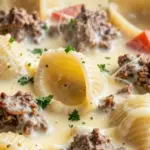
Creamy Beef & Shells Skillet
Ingredients
- 450g (1 lb) ground beef 🥩
- 225g (8 oz) large shell pasta 🐚
- 1 tbsp olive oil 🫒
- 1 onion, chopped 🧅
- 2 cloves garlic, minced 🧄
- 1 can (411g / 14.5 oz) diced tomatoes, undrained 🍅
- 240ml (1 cup) beef broth 🥣
- 240ml (1 cup) heavy cream 🥛
- 1 tsp Italian seasoning 🌿
- Salt 🧂 and black pepper 🧂
- 100g (about 1 cup) shredded mozzarella cheese 🧀
- Fresh parsley, chopped 🌱
Instructions
- Bring a large pot of salted water to a boil. Cook the shell pasta according to package directions until al dente. Drain and set aside.
- While the pasta cooks, heat the olive oil in a large skillet over medium heat.
- Add the chopped onion and sauté 2–3 minutes until translucent. Add the minced garlic and cook 30–60 seconds until fragrant.
- Add the ground beef, breaking it up with a spatula. Cook 5–7 minutes until browned and no longer pink. Drain excess fat if needed.
- Stir in the diced tomatoes with their juice, beef broth, heavy cream, and Italian seasoning. Season with salt and pepper to taste.
- Bring the mixture to a gentle simmer and let it cook 4–5 minutes so the flavors meld and the sauce slightly thickens.
- Add the cooked shell pasta to the skillet and toss to combine, cooking 2–3 minutes more until heated through.
- Sprinkle the shredded mozzarella over the top, cover the skillet for a few minutes until the cheese melts.
- Garnish with chopped fresh parsley and serve hot. Enjoy!