
Introduction
Comfort food with a confident, simple finish.
As a recipe developer I always reach for dishes that balance familiar flavors with effortless technique, and this chicken tetrazzini does exactly that. It brings together creamy dairy, tender poultry, and tender pasta into a single comforting casserole that feels like a hug on a plate.
What I love about this recipe is how forgiving it is: the sauce binds everything together, the cheese creates pockets of molten, indulgent texture, and the whole assembly can be adapted to whatever you have on hand.
This is not a fussy weeknight affair — it’s about approachable ingredients and satisfying results that feed a family or create plentiful leftovers.
As you read through the article I’ll guide you through technique, texture expectations, and smart swaps so that you can make the dish with confidence. Expect practical tips on layering flavors, coaxing creaminess without breaking, and finishing for an appealing oven-topped crust.
I’ll also include notes on how to make this ahead, store it properly, and reheat it so the pasta keeps its integrity. By the end you’ll know how to coax this classic into weeknight rotation without losing any of its homey charm.
Why You’ll Love This Recipe
Reasons this casserole earns a permanent spot on the roster.
First, it delivers a deep sense of comfort through creamy texture and melted cheese that appeals to practically every palate. The dish combines lush, saucy pasta and tender poultry for a satisfying mouthful in every forkful.
Second, the method is wonderfully flexible. It tolerates pantry-friendly staples and allows for easy swaps without losing the essence of the recipe. The structure of this casserole lets you adapt protein, adjust creaminess, or add quick veggies while keeping the end result cohesive.
Third, it’s designed for minimal fuss. Assembly is straightforward and forgiving — ingredients are combined, topped with cheese, and baked until bubbly. The technique favors a one-pan mentality: fewer dishes and more time at the table.
Finally, this recipe scales well for family dinners, potlucks, and leftovers. It reheats reliably and the flavor actually melds beautifully after resting, making it a practical choice for busy evenings.
In short: creamy satisfaction, adaptable formula, and homey results that feel like a crowd-pleasing classic.
Flavor & Texture Profile
What to expect on the palate and how to highlight the best parts.
This casserole centers on a creamy, savory sauce that coats each strand of pasta, yielding a rich mouthfeel that’s balanced by the bright snap of freshly chopped parsley at the end. The dominant flavors are dairy-forward — tangy sour cream harmonizes with savory soup base and the salty umami of grated cheese.
Texturally, the dish offers contrasts that keep every bite interesting: soft, sauced pasta; tender pockets of chicken; and a surface layer of melted, slightly browned cheese that provides a gentle chew. If the cheese is allowed to bake long enough to brown lightly, you’ll get those caramelized, toasty notes that play beautifully against the creaminess beneath.
To fine-tune balance, I recommend finishing with an herbaceous element and a gentle grind of black pepper. The fresh herb brings lift to what can otherwise feel heavy, and pepper adds a warm spice lift without heat.
If you desire more texture, stirring in a handful of toasted breadcrumbs before the final bake will add crunch; alternatively, a scattering of finely chopped roasted mushrooms or peas folded in toward the end of assembly can add earthy or sweet contrasts without overpowering the core profile.
Gathering Ingredients
Organize your mise en place for smooth assembly.
Gather the ingredients and arrange them so everything is within reach before you start.
- 1/2 cup (1 stick) butter, melted
- 2 (10.5 oz) cans cream of chicken soup
- 2 cups sour cream
- 1/2 cup chicken broth or stock
- 1/2 teaspoon salt
- 1/2 teaspoon black pepper
- 4 cooked chicken breasts, chopped
- 16 ounces linguine, cooked according to package directions
- 2 cups shredded mozzarella cheese
- 2 tablespoons grated Parmesan cheese
- Fresh parsley, chopped (optional)
When shopping, choose high-quality staples: a full-fat sour cream for creaminess, freshly grated Parmesan for better melt and flavor lift, and a firm mozzarella that melts into long strings rather than separating. If you buy pre-shredded cheese for convenience, remember some blends contain anti-caking agents that slightly affect melting behavior; freshly shredded still yields the best glossy melt.
Cook your pasta just shy of perfect al dente if you prefer a slightly softer finish after baking, or right at al dente if you want more tooth. Chop the cooked chicken into uniform pieces so each forkful gets even distribution. Have a 9×13-inch baking dish ready and a reliable oven thermometer to ensure consistent baking results.
Preparation Overview
A roadmap to streamlined assembly and even heating.
Start by prepping components so the final assembly feels effortless: cook and drain your pasta, shred or measure cheeses, and chop protein into even pieces. The objective is to have everything ready to combine so that you do not overwork the sauce or let warm ingredients sit too long.
For sauce texture, whisking cold dairy into the soup base creates a smooth emulsion; do this off heat so the dairy does not split. If you choose to warm your sauce slightly before combining, do so gently and stir continuously.
When combining pasta with sauce, fold using a wide spatula rather than vigorous stirring — this helps preserve pasta shape while ensuring even coating. Uniform distribution of the protein and cheese ensures every portion bakes consistently.
Choose a shallow baking dish for faster, even baking, or a slightly deeper one if you prefer thicker servings; if you change vessel size, look for even cheese coverage to maintain the finished texture. Rest the casserole briefly after baking so the sauce sets slightly; this makes scooping cleaner and improves texture.
Throughout, pay attention to salt balance: the cheeses and canned soup contribute sodium, so taste once combined and adjust with caution rather than adding more early on.
Cooking / Assembly Process
Step-by-step assembly and baking instructions for dependable results.
- Preheat your oven to the recommended baking temperature and prepare a 9×13-inch baking dish by lightly greasing or buttering the interior.
- In a large mixing bowl, whisk together melted butter, canned soup base, sour cream, and chicken broth until smooth and homogeneous.
- Season the sauce with salt and black pepper to taste, then fold in the chopped cooked chicken using a wide spatula to distribute it evenly.
- Add the cooked and drained linguine to the bowl and gently toss so the pasta is coated without breaking the strands.
- Transfer the combined mixture into the prepared baking dish, spreading into an even layer with the spatula for uniform baking.
- Evenly scatter shredded mozzarella over the top and finish with grated Parmesan for a balanced cheesy crust.
- Bake uncovered until the top is melted and bubbling and edges show signs of caramelization; remove and allow the dish to rest briefly so it sets and is easier to serve.
- Garnish with chopped parsley for brightness and serve warm.
A couple of technical tips: when you bake, position the dish in the center of the oven for the most even heat exposure; if your oven runs hot at the top, tent a sheet of foil for the last portion of baking to prevent over-browning. For an ultra-silky sauce, avoid overheating the dairy prior to baking — gentle mixing and a gentle oven temperature will do the work.
If you want pockets of extra golden texture, halfway through baking briefly rotate the dish and scatter a little more shredded cheese over any pale areas so the surface finishes uniformly golden.
Serving Suggestions
Simple companions and finishing touches to elevate the bake.
This casserole pairs beautifully with a bright, crisp salad to cut through the richness — think mixed baby greens with a lemony vinaigrette or a peppery arugula salad with shaved vegetables. The acidity and crunch will create a pleasing counterpoint to the creamy pasta.
For a vegetable side that roasts alongside the casserole, consider thinly sliced Brussels sprouts or green beans tossed with a little oil and garlic — they’ll crisp and caramelize while the casserole bakes. For an herb-forward finish, sprinkle chopped fresh parsley right before serving for color and freshness; alternately, chopped chives add mild onion notes that complement the cheese.
If you want to introduce textural contrast, serve with warm, crisp bread or garlic toast that can mop up the sauce. A wedge of something acidic, like quick-pickled red onions on the side, can also bring brightness.
To present the casserole family-style, place the baking dish in the center of the table and provide a sturdy spoon or spatula for portioning. Let the dish rest briefly after baking so the portions hold together cleanly — this small pause yields neater plating and preserves the balance of sauce to pasta in each serving.
Storage & Make-Ahead Tips
Plan ahead to preserve texture and flavor for leftovers or advance prep.
This dish responds well to sensible make-ahead techniques. Prepare the casserole up to the point of baking and then cover and refrigerate; when you’re ready to serve, remove the cover and bake until hot and bubbling. This preserves the texture of the pasta and avoids overbaking during storage.
For storing leftovers, cool the casserole to room temperature quickly, then refrigerate in an airtight container or cover the dish tightly. Reheat in a moderate oven to restore creaminess and avoid the microwave if you want to maintain a pleasing surface texture; a short covered reheat followed by an uncovered finish will refresh the cheese top.
If freezing, portion into smaller airtight containers or freeze the assembled but unbaked casserole; note that freezing may slightly alter pasta texture, so gentle thawing in the refrigerator overnight before baking will yield the best results. When reheating from frozen, allow extra time and cover initially to ensure the interior heats through before uncovering to brown the top.
Always label stored portions with dates and use refrigerated leftovers within a few days for best quality. For best flavor, fresh herbs should be added after reheating rather than before freezing to retain their bright aroma and color.
Frequently Asked Questions
Answers to the most common questions I receive when making this casserole.
- Can I use a different pasta shape? — Yes. Short pasta with nooks and crevices will hold sauce differently, so adjust the sauce quantity if you switch shapes.
- Can I make this vegetarian? — Substitute a savory vegetable base or mushroom mix and use vegetable broth to maintain flavor depth.
- How can I reduce sodium? — Use low-sodium broth, lower-sodium canned soup if available, and taste before adding extra salt.
- Will the dish be dry if I bake it longer? — Rest it briefly after baking to let the sauce set; if it seems dry, a splash of warm broth stirred into individual portions helps revive creaminess.
- Can I add vegetables? — Fold in quick-cooked vegetables to avoid adding excess moisture, and sauté hearty options first so they stay flavorful in the bake.
Final note: treat the recipe as a flexible framework — attention to gentle heat, even distribution of ingredients, and a finishing herb will keep the profile balanced and the texture pleasing. If you have more specific questions or want substitution ideas for dietary needs, I’m happy to help troubleshoot.
Print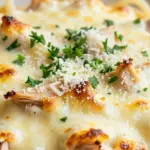
Easy Chicken Tetrazzini
Ingredients
- 1/2 cup (1 stick) butter, melted 🧈
- 2 (10.5 oz) cans cream of chicken soup 🥫
- 2 cups sour cream 🥣
- 1/2 cup chicken broth or stock 🍲
- 1/2 teaspoon salt 🧂
- 1/2 teaspoon black pepper 🌶️
- 4 cooked chicken breasts, chopped 🍗
- 16 ounces linguine, cooked according to package directions 🍝
- 2 cups shredded mozzarella cheese 🧀
- 2 tablespoons grated Parmesan cheese 🧀
- Fresh parsley, chopped (optional) 🌿
Instructions
- Preheat the oven to 350°F (175°C).
- In a large bowl, whisk together the melted butter, cream of chicken soup, sour cream and chicken broth until smooth.
- Season the sauce with salt and black pepper, then stir in the chopped cooked chicken.
- Add the cooked and drained linguine to the bowl and toss gently so the pasta is evenly coated with the sauce.
- Transfer the pasta mixture into a 9×13-inch (23×33 cm) baking dish, spreading it into an even layer.
- Sprinkle the shredded mozzarella evenly over the top, then finish with the grated Parmesan.
- Bake uncovered in the preheated oven for about 40 minutes, until the cheese is melted and the sauce is bubbling around the edges.
- Remove from the oven and let rest for 5–10 minutes to set slightly.
- Serve warm, garnished with chopped parsley and extra Parmesan if desired.