
Introduction
An honest, comforting one-pan meal
This version of egg roll in a bowl takes the familiar, nostalgic flavors of a crunchy takeout egg roll and collapses them into a single skillet for a fast, satisfying weeknight dinner. The idea is simple: concentrate the savory aromatics, the subtle heat, and the bright crunch of cabbage into a bowl you can fork into without fuss. As a pro food blogger I love recipes that deliver maximal flavor with minimal cleanup, and this one nails it — it’s approachable, forgiving, and endlessly adaptable.
What I write about most is how a technique or little tweak elevates a dish. Here, it’s the way you treat the vegetables and finish with a glossy sauce that brings the same satisfying sensation as biting through a wrapper into a warm, juicy filling. The dish plays with contrasts — warm and cool, soft and crisp, salty and lightly sweet — and that interplay is what keeps it interesting from first forkful to the last. If you want a quick midweek winner that feels like a treat without needing special equipment or hours of fussing, this is it.
Below you’ll find clear ingredient and instruction sections for easy follow-through, plus pro tips on technique, substitutions, serving ideas, and storage so you can make this on repeat without losing steam.
Why You’ll Love This Recipe
Speed, satisfaction, and flexibility
This recipe wins because it solves three common dinnertime problems: time, cleanup, and crowd appeal. It’s a rapid one-pan meal that comes together in the time it takes to chop a few things and heat a skillet. For busy cooks who want full-flavored food on a weeknight, this dish is a reliable option — it’s built to be forgiving, so slight timing or ingredient differences won’t derail the result.
Beyond speed, the bowl format is inherently customizable. You can scale, swap proteins, dial heat up or down, and add or subtract vegetables based on what’s in your fridge. That makes it perfect for families or meal-prep sessions when everyone’s tastes vary. The textures are also a major selling point: tender cooked meat juxtaposed with cabbage that still has a bit of bite makes every spoonful interesting.
As a recipe developer I also appreciate recipes that teach a technique you’ll reuse; the pan management and simple sauce whisking here are foundational skills you’ll apply across stir-fries and skillet meals. Finally, the dish travels well for leftovers — it reheats elegantly and maintains its savory profile, which is why it often earns repeat requests at my dinner table.
Flavor & Texture Profile
What you taste and why it works
The flavor profile leans on a savory, slightly sweet, umami-forward base accented by toasty sesame notes and a warming touch from ground ginger and red pepper flakes. The sauce brings cohesion: it’s the glossy bridge that ties the seasoned meat and the crisp-tender vegetables into one balanced bite. The goal is a layered flavor journey rather than a single dominant note — you want saltiness, a hint of heat, aromatic warmth, and a clean finish from green onions or fresh herbs if you choose to add them.
Texturally, this recipe shines on contrast. Proper technique keeps the shredded and shredded-style cabbage from turning limp; it should be tender but still retain a slight crunch that echoes the original egg-roll mouthfeel. The meat is cooked to tender pieces rather than mashed into a uniform mince, which gives the dish satisfying chew and varied texture. A light glossy sauce clings to the strands of cabbage and bits of meat, delivering flavor in every mouthful without making anything soggy.
If you prefer more crispness, finish with a quick high-heat toss to evaporate excess moisture; for softer, stew-like results, allow the mixture to simmer a bit longer. Small seasoning tweaks at the end — a squeeze of acid, a splash of toasted sesame oil, or fresh scallions — will brighten the whole bowl and personalize the experience.
Gathering Ingredients
Shop smart and assemble everything before you start
Good results begin with good ingredients and a little organization. Lay out your protein, fresh produce, oils, and pantry staples so you can move quickly once the pan is hot. Quality matters here: choose a freshly ground protein with a flavor profile you enjoy and crisp, fresh cabbage and carrots that add real texture.
- 1½ lb (680 g) ground beef 🥩
- 1 large onion, finely diced 🧅
- 1 tbsp minced garlic 🧄
- 2 tbsp sesame oil 🥢
- ½ cup shredded carrots 🥕
- 16 oz (450 g) coleslaw mix (cabbage & carrots) 🥗
- ½ tsp onion powder 🧂
- ½ tsp garlic powder 🧂
- ½ tsp red pepper flakes 🌶️
- 1½ tsp ground ginger 🫚
- ½–¾ cup low-sodium soy sauce 🧂
- 2 tbsp vegetable oil 🛢️
- 2 green onions, sliced (optional) 🌿
For swaps and upgrades: choose ground pork or turkey if you prefer, or remove the meat entirely and boost the umami with extra mushrooms and a splash of hoisin for a vegetarian twist. Opt for freshly grated ginger if you have it for a brighter note, and use toasted sesame oil at the end to maximize aroma. If you like a little more heat, consider increasing the red pepper flakes or adding a pinch of chili paste to the sauce. Lastly, invest in a solid wide skillet — it makes space for even cooking and efficient browning.
Preparation Overview
Mise en place and a few technique notes
Before the pan heats, do a quick mise en place to keep the cook time short and the process relaxed. That means having aromatics minced, vegetables ready to go, and the sauce components measured and whisked together. The real win here is controlling moisture: pat proteins dry if they feel wet, and don’t overcrowd the pan so ingredients brown instead of steaming. A wide, deep-sided skillet is ideal because it gives you both a browning surface and room to toss the vegetables without spillage.
A few technique details I emphasize in testing: cook the protein until it’s just done and still a little chunky rather than over-breaking it down; that yields a more interesting mouthfeel. When you add the cabbage, toss it quickly and let it wilt just slightly — you want it tender but with a bit of snap. For the sauce, whisk it together off the heat so flavors marry, then add it in to coat everything and finish with low heat to avoid reducing it into a sticky mess.
Tools I find indispensable: a sturdy pair of tongs for tossing, a heatproof spatula for breaking up protein gently, and a small bowl for the sauce. If you keep these in reach, the cooking stage becomes more about rhythm than frantic juggling.
Cooking / Assembly Process
Step-by-step skillet instructions
- Heat a large deep-sided skillet over medium heat. Add the ground beef and cook, breaking minimally so pieces stay a bit chunky, until no longer pink, about 6–8 minutes.
- Drain excess grease from the skillet, return beef to the pan, then add the diced onion and minced garlic. Cook until the onion is softened and translucent, about 3–4 minutes.
- Stir in the sesame oil, shredded carrots, and the coleslaw mix. Use tongs to toss everything together and cook for about 4–5 minutes, until the cabbage begins to soften but still has some bite.
- In a small bowl, whisk together the onion powder, garlic powder, red pepper flakes, ground ginger, soy sauce, and vegetable oil.
- Pour the sauce over the beef and vegetable mixture, reduce heat to medium-low, and simmer for another 4–5 minutes so the flavors meld and the vegetables become tender.
- Taste and adjust seasoning if needed. Garnish with sliced green onions if desired and serve hot straight from the skillet.
These steps are written to be followed exactly as the core cooking method; timing and order matter because they manage moisture and texture. Keep an eye on the pan temperature during the cabbage stage so it softens but doesn’t become mushy; high heat will evaporate moisture fast but can also cause uneven cooking if you aren’t attentive. When draining, leave behind enough fat to coat and flavor the vegetables rather than stripping the pan completely — that residual fat helps carry flavor into the cabbage strands.
Serving Suggestions
How to plate, garnish, and pair
Though this recipe is delightful served straight from the skillet, thoughtful garnishes and simple sides can elevate the experience. Fresh sliced green onions or a scattering of sesame seeds add bright contrast and visual appeal. For a touch of acidity, a few drops of rice vinegar or a quick squeeze of lime at the end will brighten the whole bowl, cutting through the savory richness and adding lift.
If you want to serve family-style, present the skillet at the table with small bowls of condiments so guests can customize: chili oil, extra soy sauce, or a spoonful of hoisin can each nudge the flavor profile in pleasing directions. For a heartier meal, offer steamed rice or warmed ramen noodles on the side; for lower-carb options, cauliflower rice or a crisp cucumber salad pair nicely. Textural toppings such as toasted peanuts or crunchy fried shallots provide additional contrast and make the dish feel more celebratory.
When serving to kids or milder palates, hold back any extra heat and let diners add spice at the table. Conversely, if you’re feeding adults who like bold flavors, serve with a small dish of sriracha or a chili-garlic sauce. Presentation tip: a shallow bowl keeps the ingredients spread out so the glossy sauce, chunks of meat, and vegetable strands are all visible — it’s attractive and practical for scooping.
Storage & Make-Ahead Tips
Keep leftovers vibrant and plan ahead
This skillet meal plays well with advance prep and leftovers, but a few guidelines help maintain the best texture. Cool any extra food quickly and transfer it to airtight containers to preserve flavor and prevent over-softening of the vegetables. Refrigerate for up to a few days for best quality. When reheating, warm gently on the stovetop with a splash of water or a touch of oil to revive the texture and prevent drying out; microwaving works in a pinch, but stirring mid-heat helps keep the cabbage from turning too soft.
For longer storage, portion the cooled mixture into freezer-safe containers and freeze for up to several weeks. Thaw overnight in the fridge before reheating to retain a better mouthfeel. If you anticipate freezing, undercook the cabbage slightly so it doesn’t become overly soft after reheating — a small adjustment that preserves structure and keeps each bite satisfying.
To make the weeknight process even easier, pre-mix the sauce in a jar and store it in the refrigerator for up to a week; assemble the meat and veg the day you cook. Alternatively, pre-shred carrots and prep aromatics so you only need to heat the pan and finish the dish. These make-ahead moves cut active cooking time and keep dinner stress-free while preserving the dish’s intended texture and flavor balance.
Frequently Asked Questions
Common questions and quick answers
- Can I make this vegetarian?
Yes — swap the ground protein for crumbled firm tofu, tempeh, or a mix of finely chopped mushrooms. Increase savory components like soy sauce or add a splash of hoisin to deepen the umami. Finish with toasted sesame oil for aroma. - How do I keep the cabbage from getting soggy?
Cook over medium to medium-high heat and toss frequently so moisture evaporates. Avoid overcrowding the pan, and remove excess liquid after browning the protein so the vegetables don’t steam. - Can I prepare parts ahead?
Absolutely. Pre-shred vegetables and whisk the sauce in advance. If freezing, slightly undercook the vegetables to preserve texture on reheating. - What can I serve with it?
Serve with steamed rice, noodles, or a crisp salad. Offer spicy condiments on the side to let diners adjust heat. - How do I adapt the heat level?
Adjust the red pepper flakes or add a spoonful of chili paste to the sauce for more heat; remove or reduce them for a milder dish.
If you have other questions about swaps, timing, or plating options, ask away — I’m happy to help you adapt this recipe to your pantry and preferences.
Print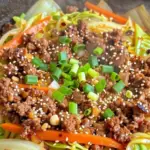
Egg Roll in a Bowl
Ingredients
- 1½ lb (680 g) ground beef 🥩
- 1 large onion, finely diced 🧅
- 1 tbsp minced garlic 🧄
- 2 tbsp sesame oil 🥢
- ½ cup shredded carrots 🥕
- 16 oz (450 g) coleslaw mix (cabbage & carrots) 🥗
- ½ tsp onion powder 🧂
- ½ tsp garlic powder 🧂
- ½ tsp red pepper flakes 🌶️
- 1½ tsp ground ginger 🫚
- ½–¾ cup low-sodium soy sauce 🧂
- 2 tbsp vegetable oil 🛢️
- 2 green onions, sliced (optional) 🌿
Instructions
- Heat a large deep-sided skillet over medium heat. Add the ground beef and cook, breaking minimally so pieces stay a bit chunky, until no longer pink, about 6–8 minutes.
- Drain excess grease from the skillet, return beef to the pan, then add the diced onion and minced garlic. Cook until the onion is softened and translucent, about 3–4 minutes.
- Stir in the sesame oil, shredded carrots, and the coleslaw mix. Use tongs to toss everything together and cook for about 4–5 minutes, until the cabbage begins to soften but still has some bite.
- In a small bowl, whisk together the onion powder, garlic powder, red pepper flakes, ground ginger, soy sauce, and vegetable oil.
- Pour the sauce over the beef and vegetable mixture, reduce heat to medium-low, and simmer for another 4–5 minutes so the flavors meld and the vegetables become tender.
- Taste and adjust seasoning if needed. Garnish with sliced green onions if desired and serve hot straight from the skillet.