
Introduction
A bowl that feels like home.
As the weather tightens its grip, there are few things more reassuring than a deep, savory soup that fills the kitchen with slow-simmered aroma. This recipe delivers exactly that feeling — rustic, soothing, and built around tried-and-true braising and simmering techniques.
What makes this preparation special is how simple steps become a layered, complex broth: an initial sear for those caramelized fond notes, a deglaze that captures every browned particle, then a gentle long simmer that softens connective tissue while coaxing out rich, meaty flavor. The grain element absorbs and contributes to the broth’s body, creating a velvety mouthfeel without relying on heavy thickeners.
I write as someone who tests soups the way others test sweaters: for warmth, texture, and the ability to improve on day two. Expect a soup that rewards patience and gives you plenty of room to personalize finishes at the table. Small technique choices — like the timing of the grain, the intensity of the initial sear, and how you skim the surface — make a noticeable difference.
Below you’ll find clear ingredient organization and step-by-step assembly guidance, plus pro-level tips for texture, serving, and leftovers so each bowl is consistently satisfying.
Why You’ll Love This Recipe
Comfort meets efficiency.
This is the kind of recipe that becomes a default dinner on cold nights — generous in portion, forgiving in technique, and elegant in its simplicity. The method relies on straightforward kitchen moves that translate into deep, slow-brewed flavor without complicated equipment or rare ingredients.
What makes it especially appealing is its adaptability. You can refine the final seasoning to suit your palate, lift the bowl with an acidic finish, or stretch the pot to feed unexpected guests. The assembly can be done in stages if you prefer to prep ahead, which means a busy evening still yields a homemade, nourishing result.
From a cook’s perspective, this dish also teaches excellent lessons in restraint: building flavor through searing, deglazing, and patient simmering rather than relying on heavy creams or quick fixes. The end result is honest, balanced, and deeply satisfying — exactly the kind of meal I reach for when I want something restorative without fuss.
In short, you’ll love how reliably comforting it is, how flexible it feels, and how the method rewards small attentions with big flavor.
Flavor & Texture Profile
Layered savory depth and a comforting mouthfeel.
This soup’s personality comes from contrasts: the concentrated savor of browned proteins, the clean brightness of aromatic vegetables transformed by heat, and the gentle, nutty chew of the grain that both soaks up and smooths the broth. Texture-wise, you’ll notice a pleasing balance between tender morsels and the toothsome bite of the grain, with the cooking liquid acting as a silky bridge between components.
Key textural and flavor elements include:
- Caramelized exterior notes from the initial sear that add a roasted, almost umami-forward backbone.
- Softened aromatics that dissolve into the broth, lending sweetness and aromatic lift without overpowering.
- A subtle body from the grain that yields a comforting viscosity to each spoonful while keeping the soup broth-forward.
Finishing touches like a bright acid or a scattering of fresh herbs elevate the overall profile — they cut through the richness and keep the bowl lively. For mouthfeel adjustments, little additions such as a drizzle of oil or a knob of butter can add gloss and silk, while a splash of vinegar or citrus brightens the whole pot instantly. These are simple levers that allow you to steer the soup toward richer or fresher territory depending on the day.
Gathering Ingredients
Organize before you cook.
Having everything prepped and measured saves time at the stove and ensures each step flows smoothly. Lay out your components in small bowls or on a tray so you can add them without pause — this keeps the cooking rhythm steady and minimizes the chance of overcooking delicate elements.
Below is a clear, structured ingredients list for easy mise en place:
- 2 lb (900 g) chuck roast, cut into 1-inch cubes
- 1/2 tsp kosher salt
- 1/2 tsp ground black pepper
- 2 tbsp vegetable oil (or neutral oil)
- 9 cups (2.1 L) beef broth
- 1 large yellow onion, diced (about 1 1/2 cups)
- 3 medium carrots, sliced (about 1/2 cup)
- 2 ribs celery, diced (about 1/2 cup)
- 3 tsp garlic, minced (about 3 cloves)
- 3 tbsp tomato paste
- 1 cup (200 g) pearl barley
- Fresh parsley, chopped for garnish
Pro tip for selection and prep: choose components that are fresh and uniform in size for even cooking. Trim any excess connective tissue from the protein pieces for cleaner browning, and rinse the grain briefly to remove surface dust. Keep your stock chilled until the moment you need it to maintain safety and clarity, and use a neutral oil with a high smoke point for the initial sear to maximize browning without burning.
Image prompt is below to show a realistic flat-lay of all and only the raw ingredients for reference.
Preparation Overview
A succinct plan to build depth.
Before you turn on the heat, visualize the sequence: sear to create a flavorful foundation, deglaze to capture the fond, combine aromatics and concentrated paste for a flavor boost, simmer to tenderize, then finish with the grain to achieve the desired thickness. This mental map helps you move deliberately and avoid rushed adjustments later.
Start with a hot heavy pot so surfaces caramelize quickly and evenly; crowded protein will steam instead of brown, so plan for batches if needed. After browning, a controlled deglaze retrieves the deeply flavored bits stuck to the pan — those bits dissolve into the liquid and become invisible flavor engines. When you add concentrated elements, distribute them over warm surfaces to toast slightly and round their acidity.
As the pot simmers, keep an eye on the liquid level and clarity. Gentle convection helps tenderize without tearing fibers, so maintain a low simmer rather than a rolling boil. When you introduce the grain, consider its final texture and the pot’s remaining liquid: the grain will swell, so use a watchful eye and top up with hot liquid when necessary.
Finally, remember that finishing touches — acid, herbs, or a grind of pepper — are applied at the end to keep their brightness intact. These finishing moves transform a good pot into a memorable one.
Cooking / Assembly Process
Step-by-step cooking and assembly.
Follow these ordered steps for consistent results:
- In a medium bowl, toss the chuck roast cubes with kosher salt and black pepper; set aside.
- Heat the vegetable oil in a large Dutch oven or heavy-bottomed pot over medium heat.
- Add the beef in batches to avoid crowding and brown on all sides, about 2–3 minutes per side (7–8 minutes total). Transfer browned pieces to a plate.
- Pour about 1 cup of the beef broth into the pot and scrape the bottom with a wooden spoon to loosen browned bits — this adds deep flavor.
- Return all the browned beef to the pot. Add the diced onion, sliced carrots, diced celery, minced garlic, and tomato paste. Stir to combine.
- Bring the mixture to a boil, then reduce heat to low. Cover and let simmer gently until the beef is tender, about 60 minutes.
- Stir in the pearl barley, cover again, and cook until the barley is tender, about 25–30 minutes. If soup becomes too thick, add more broth or water a little at a time.
- Taste and adjust seasoning with additional salt and pepper as needed. For extra brightness, squeeze a little lemon or add a splash of red wine vinegar (optional).
- Ladle the soup into bowls, garnish with chopped parsley, and serve warm with crusty bread if desired.
Technique notes embedded in the steps: when browning in batches, let pieces sit briefly to form a crust before turning; when deglazing, use a wooden spoon to scrape and dissolve the fond completely; maintain a low simmer to prevent the protein from breaking down excessively while still allowing connective tissue to soften. Monitor the grain near the end of its cooking window and adjust liquid incrementally so you keep the desired consistency.
Image prompt below depicts the pot mid-cooking with visible action, tools, and texture changes — not a finished plated presentation.
Serving Suggestions
Make each bowl feel intentional.
Serving this soup is an opportunity to add contrasts in temperature, texture, and flavor. A scattering of fresh herbs brightens the pot and adds green color that contrasts the deep brown of the broth. Consider a finishing squeeze of acid to lift and clarify the savory notes right before serving; this is a small move that significantly brightens the overall experience.
For textural contrast, pair the bowl with something crisp or crunchy at the side — toasted bread, grilled croutons, or a seeded cracker — so each spoonful alternates between warm, silky broth and crisp bites. If you want to introduce richness, offer a small dish of softened butter or a drizzle of high-quality oil at the table so diners can tailor the mouthfeel.
When arranging bowls, keep garnishes minimal and purposeful: a light sprinkle of chopped herbs, a fresh grind of black pepper, and a discreet wedge of lemon or a tiny dish of vinegar for those who prefer a bright finish. These small accompaniments allow each diner to personalize the bowl without scrambling for condiments.
Pairing thoughts: a simple green salad with a tangy vinaigrette complements the soup’s depth, while robust bread rounds out the meal and soaks up the last flavorful drops from the bowl.
Storage & Make-Ahead Tips
Plan ahead for great leftovers.
This soup is forgiving and actually benefits from resting in the fridge overnight: flavors meld and deepen. When you plan to store or reheat, use airtight containers to preserve aroma and prevent the broth from absorbing other fridge odors. Cool the pot slightly before sealing to protect container integrity and to help the refrigerator maintain proper temperature.
If you plan to freeze portions, leave a little headspace in the container because liquids expand slightly when frozen. For best texture after reheating, consider storing the grain and the broth slightly separate if you expect long-term freezing; the grain can absorb a lot of liquid and sometimes becomes overly soft after thawing and reheating. To reheat from chilled or frozen, warm gently over low heat and add a splash of hot stock or water if the pot has thickened.
When reheating, recover the pot partially to preserve moisture and stir occasionally to ensure even warming. If the texture has softened more than desired, a short simmer with a little fresh liquid can help revive body and roundness.
For make-ahead prep, perform searing and deglazing in advance and store components separately: the braised protein and vegetables can be chilled and the broth kept hot or warm until assembly. Quick finishes and fresh herbs should be reserved for the moment of serving to retain brightness.
Frequently Asked Questions
Common queries answered by a cook.
Q: Can I use a different cut of meat?
A: Choose a cut that benefits from long, gentle cooking; tougher, well-marbled pieces respond best to the low-and-slow approach because they yield deep flavor and become tender without drying out.
Q: How can I adjust the pot for a thicker or thinner result?
A: Control the final viscosity by adjusting the amount of liquid near the end of cooking and by how long you let it sit uncovered. A short reduction will concentrate flavors and thicken the broth naturally.
Q: Is an acid really necessary at the end?
A: Acid is optional but recommended for balance; a tiny amount brightens and cuts through richness, making flavors pop.
Q: Can I make this in a slow cooker or pressure cooker?
A: Both appliances can be used, though timing and liquid adjustments vary; conversion guidelines will help, and browning beforehand preserves depth of flavor.
Q: What’s the best way to reheat without overcooking the grain?
A: Reheat gently over low heat and add a splash of hot liquid if the pot seems dense; alternatively, reheat the broth separately and add the grain at serving time for a fresher bite.
Final note: experiment with small finishing variations and keep a cooking journal of adjustments — small changes compound into a signature bowl you’ll return to again and again.
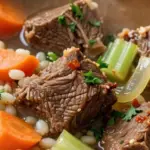
Hearty Beef & Barley Soup
Ingredients
- 2 lb (900 g) chuck roast, cut into 1-inch cubes 🥩
- 1/2 tsp kosher salt 🧂
- 1/2 tsp ground black pepper 🌶️
- 2 tbsp vegetable oil (or neutral oil) 🫒🌽
- 9 cups (2.1 L) beef broth 🍖🍲
- 1 large yellow onion, diced (about 1 1/2 cups) 🧅
- 3 medium carrots, sliced (about 1/2 cup) 🥕
- 2 ribs celery, diced (about 1/2 cup) 🌿
- 3 tsp garlic, minced (about 3 cloves) 🧄
- 3 tbsp tomato paste 🍅
- 1 cup (200 g) pearl barley 🌾
- Fresh parsley, chopped for garnish 🌿🌱
Instructions
- In a medium bowl, toss the chuck roast cubes with kosher salt and black pepper; set aside. 🥩🧂
- Heat the vegetable oil in a large Dutch oven or heavy-bottomed pot over medium heat. 🫒🔥
- Add the beef in batches to avoid crowding and brown on all sides, about 2–3 minutes per side (7–8 minutes total). Transfer browned pieces to a plate. 🍳🥩
- Pour about 1 cup of the beef broth into the pot and scrape the bottom with a wooden spoon to loosen browned bits — this adds deep flavor. 🍖🍲
- Return all the browned beef to the pot. Add the diced onion, sliced carrots, diced celery, minced garlic, and tomato paste. Stir to combine. 🧅🥕🌿🧄🍅
- Bring the mixture to a boil, then reduce heat to low. Cover and let simmer gently until the beef is tender, about 60 minutes. ⏳🔥
- Stir in the pearl barley, cover again, and cook until the barley is tender, about 25–30 minutes. If soup becomes too thick, add more broth or water a little at a time. 🌾🥣
- Taste and adjust seasoning with additional salt and pepper as needed. For extra brightness, squeeze a little lemon or add a splash of red wine vinegar (optional). 🧂🌶️🍋
- Ladle the soup into bowls, garnish with chopped parsley, and serve warm with crusty bread if desired. Enjoy! 🍲🌿🥖