
Introduction
A warm bowl of one-pot chicken and rice feels like home.
As a recipe developer who tests weeknight dinners repeatedly, I can tell you this is the kind of dish that becomes part of your regular rotation. The method is simple, the cleanup minimal, and the results generous — the kind of comfort food that hugs you back on busy evenings.
I love how the process combines straightforward techniques: a confident sear for chicken skin, a brief sauté for aromatics, and a low gentle simmer that allows rice to finish perfectly while absorbing all the savory juices. The kitchen fills with an irresistible aroma that announces dinner long before the table is set.
When I write about recipes like this, I aim to give you more than instructions: I want to share the small decisions that push good into great. How to judge a proper sear, when to lower heat, and how to coax bright pops of flavor from simple pantry staples.
Stick with me here and you’ll leave this article with not only a reliable formula for a satisfying one-pot meal but also practical adjustments for ingredient swaps, texture preferences, and plating ideas that keep this dinner feeling fresh week after week.
Why You’ll Love This Recipe
This recipe earns a permanent spot in the weeknight lineup for a few key reasons.
First, it’s efficient: everything cooks in one vessel, which means you spend less time at the sink and more time enjoying the meal. Second, it’s forgiving: modest variations in timing or ingredient swaps won’t derail the dinner, so it’s ideal for busy cooks or folks new to stovetop braises and rice-cooking techniques.
Third, the balance of textures is deeply satisfying: crisped, golden chicken skin contrasts with soft, fragrant grains and tender vegetables, offering a comforting variety in every bite. I enjoy how the dish scales easily — it can feed a solo diner with generous leftovers or a small family without fuss.
Finally, it’s adaptable: you can lean on pantry spices, swap in seasonal vegetables, or adjust the herbs to match what you have on hand. That flexibility makes this a true kitchen workhorse.
Overall, this is the kind of recipe that rewards attention to a few simple techniques while forgiving the occasional shortcut. It’s comforting, reliable, and versatile — everything you want from a one-pot dinner when life is busy and you still want a home-cooked meal.
Flavor & Texture Profile
Understanding the flavors and textures helps you cook with intent.
This recipe centers on three complementary elements: the savory, crisped exterior of the chicken, the delicate, seasoned rice, and the bright, tender vegetables. The initial sear creates Maillard-rich notes — browned, slightly nutty and deeply savory — that infuse the pot. Those fond bits scraped off the pan become concentrated flavor that the rice absorbs during the simmer.
Texturally, the dish is about contrasts. The chicken skin should offer a first crunch, giving way to succulent meat underneath. The rice cooks to tender, separate grains with a lightly pillowy mouthfeel that carries the broth’s seasoning. Vegetables provide freshness and a slight bite: carrots contribute a sweet, earthy chew while peas give scattered bursts of vegetal sweetness.
Herbs and dried aromatics layer the profile: thyme offers a woodsy, slightly floral backdrop while paprika lifts the savory notes with a gentle warmth and color. A finishing scatter of fresh parsley brightens the whole bowl, cutting through richness and adding a herbaceous lift.
Once you internalize these elements, you can tweak the balance to preference: push for more crust on the chicken for extra texture, swap herbs for bolder flavors, or add a squeeze of acid at the end to brighten the dish just before serving.
Gathering Ingredients
Assemble everything before you start to ensure a smooth, stress-free cook.
I always recommend laying out ingredients in small prep bowls and measuring liquids ahead of time so that the moment the pot is hot, you can move through the steps without scrambling. Here’s what you’ll have on your mise en place:
- Chicken thighs, bone-in and skin-on
- Long-grain rice
- Chicken broth
- Olive oil
- Onion, chopped
- Garlic, minced
- Carrots, diced
- Peas (fresh or frozen)
- Paprika
- Dried thyme
- Salt and pepper
- Fresh parsley for garnish
Practical notes for shopping and substitutions: if you prefer a leaner cut, you can choose skin-on boneless thighs and adjust searing time slightly; frozen peas work just as well as fresh; a good-quality chicken broth makes a meaningful difference since the rice absorbs so much of the cooking liquid.
Finally, pick a sturdy, heavy-bottomed pot with a snug lid — even heat distribution and tight coverage are crucial for even rice cooking and retaining steam. Having a wooden spoon or heatproof spatula and a small sieve or measuring cup for the broth will make the assembly seamless.
Preparation Overview
A clear prep plan turns a good dinner into a great one.
Start by prepping everything on the counter: pat dry your chicken, chop the onion, mince the garlic, dice the carrots, and measure the rice and broth. Patting the chicken skin dry is a small step with a big payoff — dry skin sears to a much better, more golden crust.
When searing, resist the urge to crowd the pan. Give each piece space so it develops direct contact with the hot surface; overcrowding steams instead of sears, preventing the sought-after brown crust. Use medium to medium-high heat at first to get that golden color, then temporarily remove the chicken to finish the rice stage in the same pot.
Scraping up the fond — those brown bits left on the bottom after searing — is an essential flavor-building move. When you sauté the onions and garlic, those fond fragments loosen and dissolve into the oil and then into the broth, creating depth in the rice.
Finally, monitor doneness visually and by feel: rice should be tender and mostly separate, not gluey, and the chicken should be cooked through to a safe internal temperature while staying juicy. Allowing a short rest off the heat helps the rice finish absorbing and the chicken juices redistribute, resulting in a more harmonious plate.
Cooking / Assembly Process
Follow these steps to build flavor and achieve perfect textures.
1. Heat the oil in a heavy-bottomed pot until shimmering, then season the chicken and place it skin-side down to sear until the skin is deeply golden and crisp. Flip to brown the other side briefly; then remove and set aside to rest.
2. In the same pot, add the chopped onion and sauté until it becomes translucent, using the spatula to scrape up the fond left by the chicken. Add the minced garlic and diced carrots next, cooking until the carrots begin to soften and the aromatics are fragrant.
3. Stir the rice into the aromatic vegetables to coat the grains with oil and flavor, then pour in the chicken broth and add the dried thyme. Bring the mixture to a gentle boil to unify the flavors before covering.
4. Nestle the seared chicken thighs back on top of the rice, reduce the heat to low, cover the pot, and simmer until the rice is tender and the liquid is absorbed. About five minutes before the end of cooking, stir in the peas gently so they cook through without breaking down.
5. Remove from heat and allow the pot to rest, covered, so the rice continues to steam and finish. Fluff the rice with a fork, sprinkle with chopped parsley, and serve warm straight from the pot.
Throughout the process, taste where appropriate and adjust seasoning at the end; a final pinch of salt or a grind of pepper can lift the whole dish.
Serving Suggestions
Simple finishes lift this rustic one-pot meal into something a little special.
Serve it straight from the pot for a communal, cozy presentation; there’s something inviting about family-style service that keeps the meal relaxed. A sprinkle of fresh parsley adds color and a herbal lift that brightens the savory base.
If you want to introduce contrast, consider these complementary accompaniments:
- A crisp green salad dressed with lemon and olive oil to add acidity and crunch
- Pickled red onions or quick-pickled cucumbers for a sharp, tangy counterpoint
- Warm crusty bread for sopping up any lingering juices
- A drizzle of bright chimichurri or green herb sauce if you prefer bolder herb flavor
For beverage pairings, go simple: a chilled white wine with bright acidity complements the dish’s richness, while a light-bodied red or a citrusy beer also works well. If serving to kids or picky eaters, keep the garnishes separate so each diner can tailor the plate.
Presentation tip: a final spray of lemon juice or a few grinds of fresh pepper just before serving makes the flavors pop and refreshes the palate against the savory, homey base.
Storage & Make-Ahead Tips
This one-pot dinner stores and reheats well, making it ideal for meal prep.
To store, cool the pot contents quickly to room temperature, then transfer to airtight containers and refrigerate. The rice will continue to firm up as it chills; when reheating, add a splash of broth or water and cover to steam gently so the grains loosen and regain a just-cooked texture.
For make-ahead planning, you can sear the chicken ahead of time and keep it refrigerated for a day before finishing the rice stage; this saves time on a busy evening and preserves the benefits of the initial browning step. Alternatively, you can prepare the vegetable base and rice a few hours in advance, then reheat briefly and nestle the warmed seared chicken on top to finish together.
If freezing, cool completely and freeze in portioned containers. Reheating from frozen is best done by thawing overnight in the refrigerator and then gently reheating with added moisture to revive the rice. Avoid high heat that causes dryness; instead, use low heat and covered steaming to restore tenderness.
Leftovers make a convenient lunch, and the flavors often deepen after a day in the fridge. A quick squeeze of fresh lemon or a sprinkle of fresh herbs at serving time brings brightness back to stored portions.
Frequently Asked Questions
Common reader questions with straightforward answers to make this recipe even easier in your kitchen.
Q: Can I use boneless chicken instead of bone-in?
A: Yes. Boneless pieces work and will reduce total cooking time slightly. Keep an eye on doneness to avoid overcooking.
Q: What type of rice is best?
A: Long-grain rice yields separate, fluffy grains. Short-grain varieties will be stickier and change the final texture.
Q: Can I make this vegetarian?
A: Swap the chicken for hearty mushrooms or tofu, and use vegetable broth; adjust searing and simmering times accordingly.
Q: My rice came out slightly undercooked; what should I do?
A: Return the pot to low heat, add a small splash of hot broth or water, cover, and cook until the grains are tender.
Q: How do I keep the chicken skin crispy when serving?
A: A brief rest uncovered before serving helps the skin retain its texture; if it softens, a quick broil in a hot oven can re-crisp it.
Q: Can I double the recipe?
A: You can, but ensure your pot is large enough for even cooking; rice needs room and consistent heat to finish properly.
Final note: trust your senses as you cook — aroma, sight, and texture are excellent guides. Taste and adjust seasoning at the end, and don’t be afraid to personalize the herbs or add a finishing acid to brighten the dish before serving.
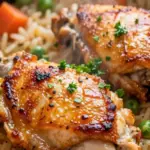
One-Pot Chicken & Rice
Ingredients
- 4 chicken thighs, bone-in and skin-on 🍗
- 1 cup long-grain rice 🍚
- 2 cups chicken broth 🥣
- 1 tablespoon olive oil 🫒
- 1 onion, chopped 🧅
- 3 cloves garlic, minced 🧄
- 1 cup carrots, diced 🥕
- 1 cup peas (fresh or frozen) 🫛
- 1 teaspoon paprika 🌶️
- 1 teaspoon dried thyme 🌿
- Salt to taste 🧂
- Pepper to taste 🌶️
- Fresh parsley, chopped (for garnish) 🌿
Instructions
- Heat the olive oil in a large, heavy-bottomed pot over medium heat.
- Season the chicken thighs on both sides with salt, pepper and paprika.
- Place the chicken skin-side down and sear for 5–7 minutes until golden brown; flip and sear another 5 minutes. Remove the chicken and set aside.
- In the same pot, add the chopped onion and sauté 2–3 minutes until translucent, scraping up any browned bits.
- Add the minced garlic and diced carrots and cook 3–4 minutes until the carrots begin to soften.
- Stir in the rice to coat with the oil and vegetables, then pour in the chicken broth and add the dried thyme. Bring the mixture to a gentle boil.
- Nestle the seared chicken thighs back on top of the rice. Reduce heat to low, cover the pot and simmer 25–30 minutes, or until the rice is tender and the liquid is absorbed.
- About 5 minutes before the end of cooking, gently stir in the peas so they cook through.
- Remove the pot from heat and let it rest, covered, for 5 minutes.
- Fluff the rice with a fork, sprinkle with chopped parsley and serve warm.