
Introduction
As a professional recipe creator I write with the pantry-savvy home cook in mind: minimal fuss, maximum comfort, and a finish that looks like you spent twice the time. This one-pot Tuscan-style spaghetti is built around that ethos — a single vessel from stove to table so cleanup never steals the joy of dinner.
There’s a satisfying rhythm to one-pot cooking: a hot pan to wake flavors, a controlled simmer to coax starch into silk, and a short pause at the end to let everything come together. I always think of these recipes as small economies of technique — a handful of purposeful moves that deliver impressive texture and mouthfeel without a laundry list of steps.
Expect quick transitions between stages: heat, brief softening, gentle boil, and a low-heat finish that both thickens and binds. The result should feel indulgent yet approachable — the kind of dinner you can trust on a busy weeknight, but also serve when friends drop by unexpectedly. No elaborate plating, no lengthy mise en place — just a comforting bowl with deep, layered flavor and an effortless clean-up. This introduction sets the scene for both the practical and sensory experience to come.
Why You’ll Love This Recipe
One-pot recipes win hearts because they pair efficiency with flavor — and this recipe exemplifies both. Reduced cleanup is the obvious advantage, but what really distinguishes a great one-pot pasta is how the cooking liquid, pasta starch, and finishing elements collaborate to form a cohesive sauce.
When I test weeknight recipes I pay attention to three practical priorities: speed, predictability, and adaptability. This dish ticks all three boxes. It’s designed to be completed in one continuous flow, which keeps the timing simple and makes it easy for cooks of any level to replicate consistent results. The technique emphasizes controlled heat and timely finishing so the sauce becomes glossy and clingy rather than thin or separated.
Another reason cooks return to this dish is its flexibility. You can adjust the richness, the degree of heat, or the level of brightness at the end without altering the whole method. With a few easy swaps or additions you can nudge the profile toward lighter or more indulgent territory. Finally, it’s a comforting, forgiving dinner: minor timing differences rarely ruin the outcome. That forgiving nature makes the recipe an ideal staple for busy households, novice cooks, and anyone who wants restaurant-style comfort without a fuss.
Flavor & Texture Profile
Think in layers: an undercurrent of savory depth, a rounded, silky mouthfeel, and lively pops of bright, acidic notes. Texture is the hero here — the sauce should cling to each strand, creating a silky ribbon that feels indulgent but not heavy.
To achieve that balance I dial in three elements: a starchy cooking liquid, a brief low-heat finish that allows emulsification, and the right sequence so tender components retain slight contrast. The pasta itself offers a tender chew that helps anchor the dish; the sauce clings and coats, amplifying each bite. Contrast is essential: a soft component that yields to the fork alongside a glossy sauce keeps the experience interesting.
On the palate you’ll notice a creamy richness tempered by bright accents that lift the overall profile. A touch of heat adds subtle wakefulness, while fresh herb notes at the finish deliver a fragrant lift that prevents the richness from feeling one-dimensional. The goal is a harmonious balance where each mouthful presents creaminess, a hint of acid, a gentle spice, and fresh aromatic lift — a profile that feels both comforting and complex. This combination is what makes the dish feel like a composed meal rather than an accidental skillet toss.
Gathering Ingredients
Ingredient list (complete and ready for one-pot cooking):
Prepare everything before you start; one-pot timing moves quickly. Below is the full, explicit list so you can measure and arrange items in order.
- 12 oz (340 g) spaghetti
- 2 tbsp olive oil
- 4 garlic cloves, minced
- 1 tsp red pepper flakes (optional)
- 1 cup cherry tomatoes, halved
- 2 cups baby spinach
- 1 cup heavy cream
- ½ cup grated Parmesan cheese
- ½ tsp salt
- ¼ tsp black pepper
- ¼ cup fresh basil, chopped
- ¼ cup sun-dried tomatoes, chopped (optional)
- 4 cups water
Pro tip: Arrange items in the order you’ll add them so you can move without pausing. Have measuring tools, a colander, and a wooden spoon at the ready. A single shallow, wide pot works best for even cooking and easier stirring; a very deep pot can make it harder to coax the pasta into the liquid smoothly.
Preparation Overview
Before you ignite the stove, take a moment to align workflow and tools. One-pot techniques reward forethought — mise en place isn’t about fuss, it’s about momentum. Set up a clear working area: measuring tools, a wooden spoon for stirring, a heatproof bowl for resting anything you might remove, and a timer.
Temperature control is a quiet, powerful tool here. Start medium, move to a boil when introducing the main cooking liquid, then drop to a gentle low heat to finish and emulsify. The low-heat finish is where the sauce becomes glossy; it’s a subtle stage where patience pays off. Avoid aggressive, high heat at that moment or the finishing elements can separate instead of binding.
Stirring rhythm matters more than constant agitation: an occasional, confident stir prevents sticking while letting the pasta release starch into the liquid. Keep an eye on the pot edges for early signs of sticking and adjust the angle of your spoon to scrape the bottom as needed. Finally, have a serving vessel warmed and accessible — a quick transfer preserves texture and keeps the sauce inviting. These preparation choices elevate the final plate without adding complexity.
Cooking / Assembly Process
Step-by-step instructions:
- Heat the olive oil in a large pot over medium heat.
- Add the minced garlic and red pepper flakes (if using) and sauté for about 1 minute until fragrant.
- Stir in the halved cherry tomatoes and cook 2–3 minutes until they soften and start to release their juices.
- Pour in 4 cups of water and bring to a boil.
- Add the spaghetti, gently pushing it down as it softens so it submerges in the liquid. Stir occasionally to prevent sticking and cook until al dente according to package directions.
- Reduce heat to low. Stir in the heavy cream, grated Parmesan, salt and black pepper until the cheese melts and a creamy sauce forms.
- Add the baby spinach and sun-dried tomatoes (if using). Stir until the spinach wilts and everything is well combined.
- Remove from heat, sprinkle with chopped fresh basil, toss gently and serve immediately. Add extra Parmesan if desired.
Technique notes: Keep the heat low when adding finishing elements to allow the sauce to emulsify rather than separate. Stir with a broad spoon to ensure the pasta is evenly coated. If the sauce seems too thin during finishing, a short gentle simmer for 30–60 seconds will concentrate it; if it tightens too much, a splash of the reserved cooking liquid will loosen and gloss the sauce.
Serving Suggestions
This preparation shines when served simply and confidently. Aim for contrasts in temperature and texture at the table: a warm, glossy bowl straight from the pot balanced with crisp or acidic accompaniments will keep the plate lively. Think contrasts: a crunchy side, a fresh green element, or something bright to cut through richness.
For a relaxed weeknight, serve family-style straight from the pot so people can customize each bowl — a communal approach feels effortless and convivial. If you’re hosting, pre-warm shallow bowls to retain heat and finish each portion with a final aromatic flourish right before it reaches the table. Pairing wise, a chilled crisp white or a light-bodied rosé complements richer notes without overwhelming them; a light-bodied red can also work if you prefer more tannic structure.
Textural garnishes bring the last bit of sparkle: something to add a clean crunch or a fresh, bright note at the finish will elevate each bite. Keep plating casual: the goal is approachable, homey elegance that highlights the dish’s creaminess and layered flavors without overcomplication. Serve promptly to enjoy the sauce at its best consistency.
Storage & Make-Ahead Tips
This recipe is best enjoyed fresh, but with mindful handling it stores and reheats well for later meals. Cool the dish quickly to prevent over-softening and to preserve texture; shallow containers help speed the chill. Refrigeration: Transfer into airtight containers and store for up to a few days. When reheating, choose gentle methods to preserve sauce texture: a low stovetop heat with occasional stirring or a short burst in the oven with a cover to prevent drying. A splash of warm water or broth during reheating helps loosen any tightened sauce and restores gloss.
Freezing is possible but will affect texture to some degree. If you plan to freeze, cool completely and use freezer-safe containers; when thawing, move to the refrigerator overnight and reheat gently the following day. Avoid microwaving at full power from frozen, which can make components rubbery.
Make-ahead strategy: complete through most of the cooking, cool, and refrigerate; finish the gentle low-heat emulsification just before serving to regain silky cohesion. Use shallow layers to cool faster and portion into meal-sized containers for efficient reheating. These approaches maintain the best balance between convenience and quality.
Frequently Asked Questions
Can I make this ahead of time?
Yes — the dish can be mostly prepared ahead and finished gently before serving to restore creaminess and texture. Cooling rapidly and using shallow containers preserves texture for refrigeration. When reheating, low, steady heat and a splash of warm liquid restore the sauce’s gloss without separating.
Will this hold up if I double the recipe?
Doubling is possible, but be mindful of pot size and stirring access; a larger shallow pan gives better control than a very deep pot. Maintain similar ratios of liquid to pasta and adjust heat management to ensure even cooking.
Can I make this dairy-free or lighter?
Yes — choose a stable plant-based alternative and adjust finishing technique to encourage emulsification. Keep the final finishing on low heat to mimic the glossy binding effect of richer finishes.
What if the sauce separates during finishing?
Lower the heat immediately and stir continuously; a small splash of warm cooking liquid can help bring the components back together. Gentle whisking or spooning helps re-emulsify the sauce without overcooking.
How can I adjust the spice level?
Modify the amount of heat-related components to taste and balance with bright or cooling elements at the end. Tasting and small incremental changes work best to achieve your preferred warmth.
Final FAQ note:
If you have a specific dietary restriction or want substitution ideas tailored to your pantry, tell me which ingredient you’d like to swap and I’ll suggest tested alternatives and technique adjustments so the final result remains satisfying.
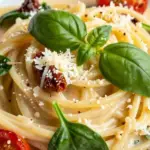
One-Pot Creamy Tuscan Garlic Spaghetti
Ingredients
- 12 oz (340 g) spaghetti 🍝
- 2 tbsp olive oil 🫒
- 4 garlic cloves, minced 🧄
- 1 tsp red pepper flakes (optional) 🌶️
- 1 cup cherry tomatoes, halved 🍅
- 2 cups baby spinach 🌿
- 1 cup heavy cream 🥛
- ½ cup grated Parmesan cheese 🧀
- ½ tsp salt 🧂
- ¼ tsp black pepper 🌶️
- ¼ cup fresh basil, chopped 🌱
- ¼ cup sun-dried tomatoes, chopped (optional) ☀️🍅
- 4 cups water 💧
Instructions
- Heat the olive oil in a large pot over medium heat.
- Add the minced garlic and red pepper flakes (if using) and sauté for about 1 minute until fragrant.
- Stir in the halved cherry tomatoes and cook 2–3 minutes until they soften and start to release their juices.
- Pour in 4 cups of water and bring to a boil.
- Add the spaghetti, gently pushing it down as it softens so it submerges in the liquid. Stir occasionally to prevent sticking and cook until al dente according to package directions.
- Reduce heat to low. Stir in the heavy cream, grated Parmesan, salt and black pepper until the cheese melts and a creamy sauce forms.
- Add the baby spinach and sun-dried tomatoes (if using). Stir until the spinach wilts and everything is well combined.
- Remove from heat, sprinkle with chopped fresh basil, toss gently and serve immediately. Add extra Parmesan if desired.