
Introduction
A weeknight hero that feels anything but simple.
- This recipe is crafted to deliver creamy comfort with a lively lift — all while keeping the cleanup minimal and the process approachable.
- It’s one of those dishes that rewards a tiny bit of technique with big payoff on texture and mouthfeel.
- Ideal when you want something comforting but not heavy, with contrasting bright notes that keep each bite vibrant.
Why it works:
The method concentrates flavor by cooking everything together so starch from the pasta helps create a naturally silky sauce. Gentle heat and timely stirring coax the right level of creaminess without needing a roux or long simmer. This approach is perfect for cooks who value flavor and speed in equal measure.
What to expect on the plate:
A luxuriously smooth coating that clings to each strand or bite, bright accents that cut through the richness, and soft-tender vegetables that add freshness and lift. Texturally, the contrast between creamy sauce and al dente pasta keeps the dish engaging, while small herb finishes add aromatic clarity.
Tone and vibe:
This is home-cooked elegance — uncomplicated, reliable, and satisfying. It’s the sort of meal you make when you want comfort but also want to feel like you’ve done something special for the table.
Why You’ll Love This Recipe
Effortless technique, impressive results.
- Minimal pots and pans — everything comes together in a single vessel so you save time on both cooking and cleanup.
- Balanced richness — the method gives you a velvety sauce that never feels heavy because it’s brightened and lifted by thoughtful acidic notes.
- Customizable — the foundation is forgiving, so you can adapt textures and add-ins to match what’s in your fridge without losing the essence.
For busy cooks
The streamlined workflow fits into tight evenings: a quick sauté, a single simmer, then a gentle finish. That means you can plate something that tastes like you took your time, even on fast nights.
For cooks who love technique
There’s satisfying craft in coaxing starch into a silky emulsion and in using temperature control to preserve brightness while melting richness. Practicing those small moves builds confidence for faster, better results in other quick pasta dishes.
The finished experience
Expect a comforting mouthfeel with pops of freshness and a clean, lingering finish. It’s the kind of dinner that feels nourishing and elevated, without ceremony — perfect for casual evenings, impromptu guests, or when you want something reliably delicious.
Flavor & Texture Profile
A study in contrast and balance.
- Creamy base: The sauce is silk-forward, offering a plush coating that clings to every bite and provides a comforting mouthfeel.
- Bright lift: Acidity cuts through the richness, leaving a clean finish that invites another forkful.
- Soft-tender contrast: Cooked vegetables add a gentle pop and subtle textural interest without overwhelming the sauce.
- Umami whisper: A salty, savory element provides depth, rounding out the profile so the brightness doesn’t dominate.
Mouthfeel details
The ideal outcome is silky but not gluey: a sauce that lightly envelopes rather than saturates. Slightly chewy pasta gives bite against the plushness, while softened vegetable bits provide intermittent relief and freshness. Imagine a spoonful that starts with cream, then moves to a bright, citrusy note, finishes with a savory echo, and leaves a light herbaceous perfume on the palate.
How the technique shapes taste
Cooking components together lets starch naturally thicken the cooking liquid into a glossy coating. Finishing gently off heat preserves the lively top notes while letting the sauce come together into a harmonious texture that feels deliberate and refined.
Gathering Ingredients
Ingredient list and selection notes
- 12 oz (340 g) pasta of your choice
- 1 cup (240 g) ricotta cheese
- Zest and juice of 1 lemon
- 2 tablespoons olive oil
- 3 cloves garlic, minced
- 4 cups (960 ml) vegetable broth
- 1 cup cherry tomatoes, halved
- 1 cup fresh spinach leaves
- 1/2 cup grated Parmesan cheese
- Salt to taste
- Black pepper to taste
- Fresh basil leaves, for garnish
Shopping and substitution tips
Choose a high-quality fresh cheese with a smooth texture for the most luxurious finish. When selecting pasta, any shape that holds sauce well will do — consider the surface texture if you want extra cling. Look for ripe, firm tomatoes and bright herb leaves to add freshness at the end. If you prefer a different liquid base, a light, savory stock can be used, but taste as you go so the seasoning stays balanced.
On pantry readiness
This is an excellent recipe for clearing out small amounts of produce and cheese: it welcomes a handful of leafy greens or an oddball vegetable. Keep salt and pepper nearby for finishing, and a fresh citrus to brighten at the end will make a large difference.
Visual cue for quality
Look for vibrancy in fresh items and a creamy, lump-free texture in the cheese. Broth should be flavorful on its own since it forms the backbone of the sauce.
Preparation Overview
A clear plan before you start makes the process joyous.
- Mise en place: have your dairy, aromatics, and liquid measured and ready so the cooking flow is uninterrupted.
- Temperature control: start at moderate heat for aromatic release, then bring to a higher temperature to activate the pasta’s cooking, and finish at a gentle simmer for sauce formation.
- Stirring rhythm: steady, occasional stirring keeps pasta from sticking while allowing enough surface agitation for starch release.
Timing mindset
Think in short bursts: a quick aromatic sauté to bloom flavors, a focused simmer as the pasta absorbs liquid and releases starch, and a short rest to let the cheese meld into a creamy coating. Each stage is compact but purposeful.
Tools that make a difference
A wide, deep skillet or shallow pan with high walls helps the pasta cook evenly in liquid while giving you room to finish the sauce without splatter. Use a wooden spoon or heatproof spatula for gentle stirring so you preserve pasta integrity. A microplane is handy for bright zest finish if you choose to add it at the end.
Prep shortcuts
Pre-minced aromatics or pre-grated cheese can speed the process without sacrificing much in quality; just aim for freshness where it matters most. Keeping finishing herbs unchopped until plating preserves their aromatic brightness.
Cooking / Assembly Process
Step-by-step method to assemble the dish in a single pan.
- Heat the olive oil in a large deep skillet over medium heat.
- Add the minced garlic and sauté for about a minute until fragrant, taking care not to let it brown.
- Pour in the vegetable broth, add the pasta and the lemon zest and lemon juice, then bring the mixture to a boil.
- Reduce the heat to a simmer and cook, stirring occasionally, for 10–12 minutes until the pasta is tender and most of the broth is absorbed.
- Stir in the ricotta, cherry tomatoes and spinach; cook for an additional 2–3 minutes until the spinach wilts and the tomatoes soften.
- Remove the pan from the heat and mix in the grated Parmesan; season with salt and black pepper to taste.
- Serve warm topped with fresh basil leaves and extra Parmesan if desired.
Assembly notes and checks
Pay attention to the texture during the simmer: the liquid should reduce but remain glossy and slightly loose so it can finish into a silky coating when the cheeses are folded in. If the mixture thickens too much before the pasta is cooked, add a splash of hot water or reserved cooking liquid to adjust.
Finishing technique
Remove the pan from direct heat before folding in the cheeses; residual warmth is usually enough to melt them into a creamy emulsion without risking separation. Gentle, even strokes with your spoon create the most uniform coating.
Taste and adjust
Final seasoning should be done after the cheeses are incorporated so you balance salt against the natural savory notes already present in the sauce.
Serving Suggestions
Simple plating ideas to highlight the dish’s contrasts.
- Serve directly from the pan for relaxed family-style appeal — the residual heat keeps everything luscious.
- Garnish minimally to let the core textures shine: a scattering of fresh leaves and a final dusting of finely grated hard cheese add aroma and a hint of savory crunch.
- For a composed plate, spoon a nest of pasta into warmed bowls and finish with a bright grating of zest or a few torn herb leaves for perfume.
Pairing ideas
Because the dish balances richness with bright notes, pair it with sides and beverages that echo freshness and cut through creaminess. Crisp salads with acid-forward dressings or simple steamed vegetables offer contrast, while a crisp white wine or a sparkling nonalcoholic option provides a refreshing counterpoint.
Portion and presentation
Keep portions moderate to let the brightness read as intended rather than as a heavy sauce; when serving guests, warm the serving bowls briefly so the dish retains its texture and temperature on the table.
Textural accents
If you want to add a crunchy element, serve with a side of crisped bread or lightly toasted breadcrumbs tossed with a little olive oil and seasoning — add just before serving to preserve crunch.
Storage & Make-Ahead Tips
How to keep leftovers tasting fresh and how to prep elements ahead.
- Cool leftovers slightly before transferring to an airtight container to preserve texture and prevent condensation.
- When reheating, add a splash of hot water, broth or milk and rewarm gently over low heat, stirring to revive the sauce’s creaminess rather than letting it dry out.
- If you plan to make part of the recipe ahead, keep delicate herb finishes and any fresh greens separate until serving to maintain brightness and color.
Freezing considerations
Dairy-forward pasta sauces can change texture after freezing; for the best results, freeze components separately — for example, the cooked pasta and sauce cooled and packed with care — and expect some separation that can be smoothed back together with gentle reheating and whisking.
Make-ahead workflow
You can pre-measure aromatics and grate finishes in advance to speed the final assembly. If preparing for guests, complete most of the cooking and hold briefly on the final cheese incorporation and herb garnish so the dish serves at its peak.
Reheating tip
Low, gentle heat and a little added liquid are the keys to restoring silky texture without overcooking the pasta. Stirring steadily while warming helps create a uniform emulsion and brings the meal back to life.
Frequently Asked Questions
Common concerns and practical clarifications from the home cook’s perspective.
Q: Can I use a different type of cheese?
A: Yes — softer, fresh cheeses with a mild profile work best for a creamy finish. If substituting a firmer cheese, consider grating it finely and incorporating gradually so it melts evenly.
Q: What if my sauce seems too thin or too thick?
A: Adjust by adding a small amount of hot liquid to loosen or by simmering briefly to concentrate. Aim for a glossy coating that clings to the pasta rather than a heavy stew-like consistency.
Q: How can I make the flavors pop without extra fat?
A: Bright finishing touches and fresh herbs are efficient ways to lift richness without adding more oil or cheese. A little acid at the end sharpens the profile and keeps the dish feeling lively.
Q: Is this method suitable for gluten-free pasta?
A: Many gluten-free shapes work well with the one-pot technique; cook times and liquid absorption differ, so monitor texture and be ready to add liquid incrementally.
Q: Can I add protein or other vegetables?
A: Absolutely. Cooked proteins and sturdier vegetables can be integrated, but consider their moisture content and cooking times so the dish’s balance remains intact.
Final note
These answers are meant to give you confidence to adapt the recipe while maintaining its signature creamy-but-bright character. Small adjustments in technique yield reliably great results, and experimentation will help you tailor the dish to your taste.
Lower the heat immediately and stir continuously; a small splash of warm cooking liquid can help bring the components back together. Gentle whisking or spooning helps re-emulsify the sauce without overcooking.
How can I adjust the spice level?
Modify the amount of heat-related components to taste and balance with bright or cooling elements at the end. Tasting and small incremental changes work best to achieve your preferred warmth.
Final FAQ note:
If you have a specific dietary restriction or want substitution ideas tailored to your pantry, tell me which ingredient you’d like to swap and I’ll suggest tested alternatives and technique adjustments so the final result remains satisfying.
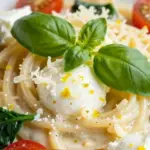
One-Pot Lemon Ricotta Pasta
Ingredients
- 12 oz (340 g) pasta of your choice 🍝
- 1 cup (240 g) ricotta cheese 🧀
- Zest and juice of 1 lemon 🍋
- 2 tablespoons olive oil 🫒
- 3 cloves garlic, minced 🧄
- 4 cups (960 ml) vegetable broth 🥣
- 1 cup cherry tomatoes, halved 🍅
- 1 cup fresh spinach leaves 🥬
- 1/2 cup grated Parmesan cheese 🧀
- Salt to taste 🧂
- Black pepper to taste 🌶️
- Fresh basil leaves, for garnish 🌿
Instructions
- Heat olive oil in a large deep skillet over medium heat.
- Add minced garlic and sauté 1 minute until fragrant, without browning.
- Pour in vegetable broth, add pasta, lemon zest and lemon juice, then bring to a boil.
- Reduce heat to a simmer and cook, stirring occasionally, 10–12 minutes until pasta is tender and most broth is absorbed.
- Stir in ricotta, cherry tomatoes and spinach; cook 2–3 minutes until spinach wilts and tomatoes soften.
- Remove from heat and mix in grated Parmesan; season with salt and black pepper to taste.
- Serve warm topped with fresh basil leaves and extra Parmesan if desired.