
Introduction
A quick, cozy pan of comfort
As a food writer I reach for recipes that feel like a warm hug on busy nights, and this one-pot orzo delivers that feeling every time. The method is intentionally simple — minimal equipment, a short list of pantry-forward ingredients, and an outcome that tastes as if you’d fussed for hours. What really makes it sing is the harmony between the slightly creamy grain and bright green peas, cut through with the savory, crystalline notes of Parmesan.
What to expect on the plate
Expect a silky, clingy texture where the pasta holds onto a glossy coating of cheese and cooking liquid rather than a heavily sauced finish. The peas bring freshness and a pop of color, while aromatics like onion and garlic build the backbone of flavor.
Why I cook this at home
- It’s forgiving: a gentle stir and a taste are all you need to adjust seasoning.
- It’s fast: you get comforting texture without an entire afternoon in the kitchen.
- It’s versatile: swap herbs, add a squeeze of citrus, or fold in leftover proteins.
I write recipes that encourage tiny experiments at the stove; this one-pot orzo is such an invitation — low-risk, high-reward, and endlessly adaptable.
Why You’ll Love This Recipe
The appeal of a one-pot dinner
There’s a special kind of freedom in a recipe that asks for one pot: fewer dishes, less angst, and more of your evening reclaimed. This orzo recipe leans into that convenience while still delivering layered, satisfying flavor. The cooking method concentrates taste; the starch released by the orzo helps coax a naturally creamy finish without relying on heavy creams or long reductions.
Family-friendly and flexible
This formula is approachable for cooks at any level. Kids often love the small, rice-like pasta and bright peas, and adults appreciate how easily it pairs with proteins or a leafy green. It’s an excellent canvas for leftovers — throw in roasted vegetables, shredded chicken, or a handful of baby spinach to change the meal’s personality in minutes.
Time and effort balance
On weeknights I prioritize recipes where a modest investment of attention returns big on taste. This dish rewards simple technique: attentive sautéing of aromatics, a gentle simmer to cook the orzo, and a final finish of cheese and herbs. No one misses a long ingredient list when the result is instantly comforting.
Flavor & Texture Profile
A study in contrasts that works
This orzo dish succeeds because it balances creamy comfort with bright, fresh notes. The mouthfeel is central: the orzo should feel silky and slightly clotting with cheese rather than separated in a thin broth. That glossy coating comes from the interplay of starches released during cooking and the emulsifying action of grated cheese.
The peas contribute a sweet, vegetal burst that counterpoints the savory, umami depth of Parmesan. Garlic and onion provide an aromatic foundation that reads as more than the sum of its parts — they give the first impressions of warmth and complexity, allowing the cheese to land as a rounded, salty finish rather than an overpowering element.
In terms of temperature and texture contrasts, I like when the dish is served warm enough for the cheese to soften and bind but not so hot that the delicate green color of the peas dulls. A scattering of fresh parsley at the end gives a herbaceous lift and a subtle textural contrast to the otherwise soft components.
Finally, consider tactile additions: a drizzle of good olive oil for silkiness, or a shower of freshly cracked pepper to add bite. These small choices make the mouthfeel more engaging without obscuring the simple, homey character of the recipe.
Gathering Ingredients
Everything you need on the counter
Before you begin, assemble your ingredients so the cooking flow is uninterrupted. A calm mise en place keeps the pot moving smoothly and prevents overcooking or missed flavors. Here is the complete ingredient list so you can lay everything out and feel confident at the stove:
- 1 cup orzo pasta
- 2 tablespoons olive oil
- 1 small onion, finely chopped
- 2 cloves garlic, minced
- 3 cups vegetable broth
- 1 cup fresh or frozen peas
- 1/2 cup grated Parmesan cheese
- Salt and pepper, to taste
- Fresh parsley, chopped (for garnish)
When you place these items on the counter, arrange them visually from mild to bold so you can grab aromatics first, then starch, then liquids and finishing elements. If using frozen peas, have them measured and ready to drop in; if using fresh, a quick blanch yields the brightest color. Grated cheese performs differently than a chunk you plan to grate at the end — pre-grating saves time and integrates more evenly. A final tip: tube-shaped orzo is small and quick to cook, so keep any needed utensils nearby — a sturdy wooden spoon, a lid for the pot, and a heatproof bowl for resting the finished orzo.
Preparation Overview
Set up for a relaxed cook
The key to making this dish shine is thoughtful preparation rather than complicated technique. Start by ensuring your aromatics are finely chopped — even sizing keeps the onion sweet and translucent and prevents long chew. Minced garlic should be ready to hit the pan at the right moment so it releases aroma without turning bitter.
When it comes to the orzo, toasting briefly in oil creates an extra layer of nuttiness and helps each grain begin to develop a slightly firmer exterior so the final texture is pleasantly toothsome. A gentle toast also improves the pasta’s ability to absorb and bind with the cooking liquid, leading to the desired glossy finish.
Control your heat carefully: moderate initial heat to soften aromatics, then raise briefly to bring the liquid to a lively simmer before lowering for a steady cook. Stir intermittently rather than constantly — this prevents sticking while allowing starches to release gradually and the sauce to build.
Finally, think about finish and seasoning: have your cheese grated and ready, and taste toward the end so you can correct salt and pepper. Fresh herbs added at the last moment preserve their brightness and complement the dish’s creamy backbone.
Cooking / Assembly Process
Step-by-step method
Follow these sequential steps for a smooth cook and consistent results.
- Heat olive oil in a large pot over medium heat.
- Add chopped onion and sauté 3–4 minutes until translucent.
- Stir in garlic and cook about 1 minute until fragrant.
- Add orzo and toast 2 minutes, stirring to coat with oil.
- Pour in vegetable broth, bring to a boil, then reduce to a simmer.
- Cover and cook about 10 minutes, stirring occasionally, until orzo is tender.
- Stir in peas, cover, and cook 2–3 minutes until peas are heated through.
- Remove from heat and stir in Parmesan until creamy; season with salt and pepper.
- Serve warm sprinkled with chopped parsley.
Pro technique notes
During the simmering stage, pay attention to the pot’s behavior: a slow, glossy reduction indicates the starch is marrying with the liquid. If the mix looks too loose just before the final step, remove the lid briefly to encourage slight evaporation and concentrate flavor. When incorporating the cheese off heat, stir vigorously to form an emulsion rather than letting it clump; a short rest after stirring allows the texture to settle to a creamy, clingy consistency.
If your peas are frozen, add them straight from the freezer — they’ll warm without overcooking and keep a fresh bite. For fresh peas, add toward the very end to preserve green color and a sweet snap. Finish by tasting and adjusting seasoning as needed; freshly cracked pepper brightens the dish in a way pre-ground pepper cannot replicate.
Serving Suggestions
Simple plating, smart pairings
This orzo sings with just a few bright finishing touches. A scattering of freshly chopped parsley adds color and herbaceous lift, while a final drizzle of high-quality olive oil gives the surface a silky sheen. If you enjoy a peppery edge, a few twists of freshly cracked black pepper on top will heighten the savory notes.
For heartier meals, pair the orzo with seared proteins: a crisp-skinned fish or pan-roasted chicken works exceptionally well because their textures contrast the creamy pasta. For a vegetarian table, present the orzo alongside roasted root vegetables or a crisp, acidic green salad to cut through the richness.
Wine-wise, look for something with bright acidity to complement the Parmesan and peas — a light-bodied white or rosé can be a refreshing partner. In terms of accompaniments, consider these options:
- Crisp arugula salad with lemon vinaigrette to balance creaminess.
- Quick pan-seared shrimp tossed in garlic and lemon as a protein boost.
- Warm, crusty bread for sopping any remaining glossy juices.
Serve portions warm so the cheese remains supple. If you plan to present this dish at a gathering, finish it just before guests arrive and hold it briefly off heat with the lid on — the texture remains pleasant and the flavors stay vibrant.
Storage & Make-Ahead Tips
Keeping leftovers bright
This orzo is ideal for make-ahead cooking, but note that pastas with cheese can firm up in refrigeration as the starches and fats solidify. To store, cool the dish quickly to room temperature, then transfer to an airtight container and refrigerate. For best texture, consume within a few days.
When reheating, restore silkiness by loosening the pasta with a splash of warm broth, water, or a small drizzle of olive oil — heat gently on the stovetop while stirring so the sauce re-emulsifies. Avoid microwaving at full power without additional liquid, as that tends to dry or clump the orzo. If frozen, portion into shallow, sealed containers; defrost overnight in the refrigerator before gentle reheating to minimize textural damage.
For make-ahead assembly, you can prepare the aromatic base and toast the orzo a day ahead, then store covered in the refrigerator. When ready to finish, add the broth and proceed with cooking; this approach shortens active hands-on time without sacrificing flavor. Keep grated cheese separate until serving for the freshest mouthfeel, or add it during the final stir if you prefer it incorporated during reheating.
A note on peas: if using frozen peas in stored leftovers, they generally retain their texture better than fresh after reheating. Fresh peas added before storage may soften more upon reheating, so consider adding a small handful of fresh peas at the very end when serving if you want the brightest bite.
Frequently Asked Questions
Can I use stock other than vegetable?
Absolutely. Using a different stock will change the dish’s flavor profile subtly: a chicken stock will add savory depth, while a mushroom stock can introduce umami notes. Taste as you go to balance seasoning.
What if I don’t have Parmesan?
Hard, aged cheeses with good melting and salty qualities are the ideal swap. Think along the lines of Pecorino or a well-aged Grana. If using a different cheese, add a little at a time to achieve the desired creaminess.
Can I make this gluten-free?
Yes—choose a gluten-free orzo made from rice or corn. Cooking times and absorption will vary, so watch texture closely and adjust liquid as needed.
How do I keep the peas bright?
Add them toward the end of cooking and limit exposure to high heat; a quick finish will warm them through while preserving color and sweet snap.
Why does my orzo get gummy sometimes?
Overstirring or high heat can release too much starch too quickly. Use moderate heat, stir intermittently, and avoid excessive agitation to encourage a glossy rather than gummy finish.
Final note
If you take one thing away from these FAQs, let it be this: small adjustments — a splash of liquid when reheating, a final herb garnish, or the timing of the peas — make a big difference in turning a simple weeknight dish into a standout comfort meal.
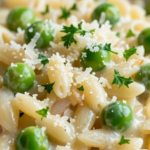
One-Pot Orzo with Peas & Parmesan
Ingredients
- 1 cup orzo pasta 🍝
- 2 tablespoons olive oil 🫒
- 1 small onion, finely chopped 🧅
- 2 cloves garlic, minced 🧄
- 3 cups vegetable broth 🥣
- 1 cup fresh or frozen peas 🟢
- 1/2 cup grated Parmesan cheese 🧀
- Salt and pepper, to taste 🧂
- Fresh parsley, chopped (for garnish) 🌿
Instructions
- Heat olive oil in a large pot over medium heat.
- Add chopped onion and sauté 3–4 minutes until translucent.
- Stir in garlic and cook about 1 minute until fragrant.
- Add orzo and toast 2 minutes, stirring to coat with oil.
- Pour in vegetable broth, bring to a boil, then reduce to a simmer.
- Cover and cook about 10 minutes, stirring occasionally, until orzo is tender.
- Stir in peas, cover, and cook 2–3 minutes until peas are heated through.
- Remove from heat and stir in Parmesan until creamy; season with salt and pepper.
- Serve warm sprinkled with chopped parsley.