
Ratatouille is a timeless French vegetable dish that celebrates simplicity, seasonality, and Mediterranean flavors. Originating in the Provence region of southern France, ratatouille transforms humble vegetables—eggplant, zucchini, tomatoes, peppers, and onions—into a deeply aromatic, slow-simmered stew that is both comforting and elegant.
Whether served as a main dish, side, or accompaniment, ratatouille is a shining example of how careful technique and quality ingredients can elevate vegetables into something truly extraordinary.
What Is Ratatouille?
Ratatouille is a traditional Provençal vegetable stew made by slowly cooking summer vegetables in olive oil with garlic and herbs. The name comes from the French word touiller, meaning “to stir,” reflecting its rustic, home-style preparation.
Authentic ratatouille is:
- Vegetable-forward
- Naturally vegan
- Olive-oil based
- Herb-infused
- Rich without being heavy
It is not a casserole, and it is not simply vegetables thrown together—true ratatouille is about balance and technique.
Why Ratatouille Is So Popular
Ratatouille has remained a global favorite because it is:
- Naturally plant-based and healthy
- Incredibly versatile
- Made with simple, affordable ingredients
- Suitable for many diets
- Perfect hot, warm, or cold
- Even better the next day
It fits effortlessly into Mediterranean, vegetarian, vegan, and gluten-free eating styles.
Flavor Profile of a Great Ratatouille
A properly made ratatouille should be:
- Sweet and savory from ripe vegetables
- Rich from olive oil
- Herbaceous from thyme and bay
- Silky from slow cooking
- Balanced, with no single vegetable dominating
The goal is harmony, not separation.
Ingredients for Classic Ratatouille
Core Vegetables
- 1 medium eggplant, diced
- 2 zucchini, sliced
- 1 red bell pepper, chopped
- 1 yellow bell pepper, chopped
- 1 large onion, sliced
- 3 cloves garlic, minced
Tomatoes & Herbs
- 1 can (14 oz) crushed or diced tomatoes
- 2 tablespoons olive oil (plus more as needed)
- 1 teaspoon fresh thyme (or ½ teaspoon dried)
- 1 bay leaf
- Salt and black pepper to taste
Optional Add-Ins
- Fresh basil or parsley
- Tomato paste for richness
- Splash of balsamic vinegar
Why Each Vegetable Matters
Each ingredient plays a specific role:
- Eggplant adds body and richness
- Zucchini brings freshness
- Bell peppers add sweetness
- Tomatoes provide acidity and depth
- Onions and garlic build the aromatic base
Cutting vegetables evenly ensures they cook at the same pace.
Traditional vs Modern Ratatouille
Traditional Method
Each vegetable is sautéed separately, then combined and simmered together. This preserves texture and enhances flavor.
Modern One-Pot Method
Vegetables are layered and cooked together for convenience. While easier, careful timing is essential.
Both methods can produce excellent results when done properly.
Step-by-Step Instructions
Step 1: Prepare the Vegetables
Wash and cut all vegetables into uniform pieces to ensure even cooking.
Step 2: Sauté Eggplant
Heat olive oil in a large pan. Cook eggplant until lightly golden. Remove and set aside.
Step 3: Cook Zucchini and Peppers
Sauté zucchini and bell peppers separately until just tender. Set aside.
Step 4: Build the Base
In the same pot, sauté onion until soft. Add garlic and cook briefly.
Step 5: Add Tomatoes and Herbs
Stir in tomatoes, thyme, and bay leaf. Simmer gently.
Step 6: Combine Vegetables
Return all vegetables to the pot. Stir gently and simmer uncovered for 25–30 minutes.
Step 7: Adjust and Rest
Season with salt and pepper. Remove bay leaf. Let rest 10 minutes before serving.
Common Mistakes to Avoid
Overcrowding the pan: Leads to steaming instead of browning
Skipping separate sautéing: Loses depth
Overcooking zucchini: Makes it mushy
Under-seasoning: Vegetables need salt
Patience is key to great ratatouille.
How to Serve Ratatouille
Ratatouille can be served:
- As a main dish with crusty bread
- Over pasta or rice
- With grilled chicken or fish
- On toast with ricotta
- As a side dish
It’s equally delicious warm, room temperature, or chilled.
Make-Ahead and Storage Tips
Refrigeration
Store in an airtight container for up to 5 days.
Freezing
Freeze for up to 3 months.
Reheating
Reheat gently on the stovetop or enjoy cold.
Ratatouille improves in flavor over time.
Health Benefits of Ratatouille
- Rich in antioxidants
- High in fiber
- Low in saturated fat
- Supports heart health
- Naturally vegan and gluten-free
It’s a cornerstone of the Mediterranean diet.
Ratatouille Variations
Oven-Baked Ratatouille
Roast vegetables for deeper caramelization.
Spicy Ratatouille
Add chili flakes or harissa.
Herb-Forward Version
Use rosemary, oregano, or basil.
Protein Addition
Serve with eggs, chickpeas, or lentils.
Frequently Asked Questions
Q1: Can I skip eggplant?
Yes, but the texture will be lighter.
Q2: Is ratatouille supposed to be saucy?
Yes, but not soupy.
Q3: Can I make it ahead?
Absolutely—it tastes better the next day.
Q4: Is ratatouille the same as the movie version?
The movie depicts a confit-style variation, not the traditional stew.
Why This Ratatouille Recipe Works
- Proper vegetable handling
- Balanced seasoning
- Authentic Provençal technique
- Flexible serving options
- Reliable, consistent results
This approach honors tradition while remaining practical.
Conclusion
Ratatouille is more than just a vegetable dish—it’s a celebration of seasonal produce and thoughtful cooking. With its vibrant colors, layered flavors, and nourishing ingredients, this classic French recipe proves that vegetables can be just as satisfying and elegant as any meat-based dish. Once mastered, ratatouille becomes a versatile staple you’ll return to again and again.
Print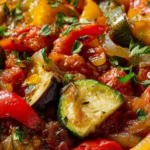
Ratatouille: A Classic French Vegetable Stew Bursting with Flavor
Ingredients
• 2 tbsp olive oil
• 1 small onion, diced
• 3 garlic cloves, minced
• 1 small eggplant (1 lb), diced into 1″ cubes (salt, drain 15 min, pat dry to reduce bitterness)
• 1 zucchini, sliced ½” thick
• 1 yellow squash, sliced ½” thick
• 1 red bell pepper, diced
• 1 (14.5 oz) can diced tomatoes, no salt added (or 2 cups fresh, peeled & seeded)
• 1 tbsp tomato paste
• 1 tsp dried herbes de Provence (or mix: thyme, rosemary, marjoram)
• 1 bay leaf
• Sea salt & black pepper to taste
• Optional: 2 tbsp fresh basil, chopped (finish); 1 tbsp capers or olives
Instructions
- Heat olive oil in a deep skillet or Dutch oven over medium. Sauté onion 5 min. Add garlic; cook 1 min.
- Add eggplant; cook 8–10 min until golden. Add zucchini, squash, and bell pepper; cook 5 min.
- Stir in tomatoes, tomato paste, herbes de Provence, and bay leaf. Simmer covered 25–30 min, stirring occasionally, until vegetables are tender but not mushy.
- Discard bay leaf. Season. Stir in fresh basil.
2. Oven-Roasted (Concentrated Flavor, Less Liquid):
- Preheat oven to 400°F (200°C).
- Toss all raw vegetables (including tomatoes and paste) with oil, herbs, salt, and pepper on a rimmed baking sheet.
- Roast 40–45 min, stirring once, until deeply caramelized and tender.
- Finish with fresh basil.
PREP TIME & NUTRITION :
Prep Time: 20 min (+15 min salting eggplant) | Cook Time: 35 min | Total Time: 1 hr 10 min
Servings: 6
Calories: 110 | Net Carbs: 8g | Fats: 7g | Protein: 3g