
Introduction
Roasted cabbage wedges are one of those deceptively simple preparations that deliver big on texture and comfort.
I fell in love with this technique because it turns an everyday vegetable into something with golden, caramelized edges and a tender, almost creamy heart—without fuss or elaborate prep.
As a food writer and home cook, I appreciate dishes that are both reliable and a little bit dramatic on the table. These wedges hit that sweet spot: they present beautifully, require minimal hands-on time, and play well with a spectrum of flavors from bright citrus to smoky spice.
In this article I’ll guide you through why this recipe works, how to get those irresistible crunchy-browned edges, and a few ideas to elevate the finished dish for weeknight dinners or a vegetarian centerpiece.
Expect practical tips written from a pro perspective—small technique tweaks and finishing touches that make a simple roasted vegetable feel considered and restaurant-worthy. Whether you’re feeding a crowd or just looking to make vegetables exciting again, this approach to cabbage rewards careful roasting with maximal flavor and texture payoff.
Read on for ingredient details, step-by-step assembly, and serving ideas that pair beautifully with the wedges.
Why You’ll Love This Recipe
A few reasons these roasted wedges become a repeat dish:
- They turn humble cabbage into a textural showpiece—crisp, nutty edges and a soft interior.
- The seasoning is straightforward but layered: aromatics, acid, fat and a finishing herb lift every bite.
- It’s approachable for cooks of any level and scales easily for small dinners or holiday spreads.
From a practical standpoint, this preparation is forgiving: even when wedges aren’t perfectly uniform, the high-heat roast blisters and browns the outer layers while the center steams gently. That contrast is what makes each wedge interesting on the plate—an interplay of textures that keeps you coming back.
Another reason to love the method is versatility. The flavor profile lends itself to many cuisines: add smoky chili for a Spanish twist, finish with toasted sesame and soy for an Asian note, or keep it Mediterranean with bright lemon and salty cheese.
Finally, it’s a recipe that feels intentional without being precious. The visual impact—tall, golden wedges arranged on a sheet or platter—reads impressive, yet the technique rewards straightforward execution and confident timing.
Flavor & Texture Profile
What to expect on the palate:
- Texture: A pronounced contrast—edges that are crisp and caramelized, and a core that stays tender and leafy.
- Aroma: Garlic and butter carry warmth, while lemon lifts with a bright, citrusy snap.
- Finish: A hint of smoke or chili adds a gentle warmth that balances the freshness of parsley and lemon.
When roasted properly, the cabbage undergoes Maillard reactions on its exposed layers, creating savory, almost nutty notes that contrast beautifully with the vegetable’s mild sweetness. The applied fat—olive oil and butter in the original approach—helps conduct heat and encourages blistering while also carrying flavor into the inner layers.
Acidic elements such as lemon juice and zest cut through the richness and refresh the palate between bites, which is especially welcome if the wedges are served alongside richer mains. A grating of a hard, salty cheese provides umami and a slight crunch when it browns in the oven.
Pay attention to the balance: too much oil flattens the experience, while too little prevents the desirable browning. The right seasoning and finishing herb lift simple roasted cabbage into something memorable without overwhelming its natural character.
Gathering Ingredients
Ingredients
Below is the complete ingredient list for this recipe. I include optional items so you can tailor the finish to your taste:
- 1 large green cabbage (about 1–1.2 kg)
- 3 tbsp olive oil
- 3 tbsp melted butter
- 3 cloves garlic, minced
- 1 lemon, zested and juiced
- 2 tbsp grated Parmesan (optional)
- 1 tsp smoked paprika or chili flakes
- 1 tsp sea salt
- ½ tsp freshly ground black pepper
- 2 tbsp fresh parsley, chopped
When gathering your ingredients, aim for fresh elements with good quality: a firm cabbage with tightly packed leaves, bright citrus free of blemishes, and freshly grated Parmesan if using.
Small choices matter. For example, choose a full-bodied olive oil rather than a neutral one if you want a fruity note in the background; use unsalted butter if you’re cautious with salt and plan to adjust seasoning at the end.
If you want to vary the profile, keep the core list intact but swap the smoked paprika for hot chili flakes for heat, or finish with a squeeze of bright yogurt sauce for creaminess. These simple ingredient moves let you adapt the same technique to different flavor directions without changing the approach.
Preparation Overview
How to think about prep
The success of this dish hinges on two simple ideas: even surfaces and flavorful contact. First, when you divide the head into wedges, aim for pieces that are similar in thickness so each wedge receives even heat and browning across the populated layers.
Knife confidence matters here—take your time to make clean, decisive cuts so the core holds each wedge together. If a wedge starts to fall apart, trim the base slightly to stabilize it rather than forcing uneven pieces into the pan.
Second, flavor travel depends on penetration: oil and seasoning should get between the layers. Rather than thinking of the fat as merely a surface glaze, work it into the leaves so the warmth of the oven carries garlic and citrus through the cabbage. A brush or spoon is a simple way to move the mixture into nooks; it’s the small touch that yields seasoning from rim to heart.
Finally, consider equipment choices. A rimmed baking sheet gives airflow and room for flipping; using parchment or foil reduces cleanup and helps lift wedges during turns. Avoid overcrowding: wedges need breathing room to blister rather than steam. These prep priorities—uniform wedges, flavor between layers, and adequate space—are what create the desired contrast of textures and depth of flavor.
Cooking / Assembly Process
Step-by-step Instructions
Follow these steps to assemble and roast the wedges for optimal browning and tenderness:
- Preheat the oven to 220°C (425°F) and prepare a rimmed baking sheet with parchment paper or foil.
- Remove any loose outer leaves from the cabbage and cut the head into 6–8 wedges, keeping the core intact to hold each wedge together.
- In a small bowl, whisk together the olive oil, melted butter, minced garlic, lemon zest and juice, smoked paprika (or chili flakes), sea salt, and black pepper.
- Brush or spoon the oil-butter mixture over both sides of each cabbage wedge, making sure some of the mixture gets between the layers for flavor penetration.
- Place the wedges cut side down on the prepared baking sheet and, if using, sprinkle Parmesan over the tops to allow it to brown.
- Roast in the preheated oven for 20–25 minutes, then flip the wedges and roast an additional 8–12 minutes until the exposed edges are deeply browned and the centers are tender.
- Remove the baking sheet from the oven and finish with chopped parsley, adjusting seasoning with extra salt, pepper, or lemon if desired.
- Serve warm as a side, or add a dollop of yogurt or tahini sauce to make the dish heartier.
Tips for execution: give the wedges space and don’t be afraid of deep browning—that’s flavor. Use a sturdy spatula or tongs to flip gently so the wedges keep their shape. If you want an extra caramelized finish, move the rack closer to the heat source for the final minutes and watch carefully so the edges don’t burn.
Serving Suggestions
How to present and pair the wedges
These roasted cabbage wedges are versatile and visually striking, so think about contrast and complementary textures when serving. A simple garnish of fresh herbs and an extra squeeze of acid will brighten the dish right before it hits the table.
For casual meals, arrange wedges on a large platter, sprinkle with a little finishing salt, and offer a bowl of tangy yogurt sauce or tahini alongside for dipping. The creaminess contrasts with the crispy edges and gives each bite a silky finish.
If you’re composing a composed plate, pair the wedges with protein that complements their savory-sweet notes: grilled fish, roasted chicken, or a hearty legume stew are great partners. Think about color and texture too—add a crunchy element such as toasted seeds or nuts for extra bite.
To elevate the dish for entertaining, finish with a drizzle of good-quality olive oil, a scattering of finely grated hard cheese, and a handful of microgreens or chopped herbs. Serve warm so the textures are at their best. These simple serving moves transform a humble vegetable into a centerpiece that feels intentional and celebratory.
Storage & Make-Ahead Tips
Storing and reheating
These wedges keep well and are great for make-ahead convenience. After cooling completely, transfer them to an airtight container and refrigerate; they maintain good texture for several days and reheat nicely when you want a quick side.
For reheating, use a hot oven or a toaster oven to refresh the exterior—this approach revives some of the crispness without overcooking the interior. Avoid the microwave if you want to preserve texture; it will soften the edges and flatten the contrast that makes the wedges so appealing.
If you plan to make them ahead for a larger meal, roast the wedges almost to done, cool them, then finish them under high heat just before serving to regenerate color and crunch. This two-stage approach saves time while preserving the best texture.
Freezing is possible, though textural changes will occur; for long-term storage, flash-freeze individual wedges on a tray, then pack them in sealed bags and re-crisp in a very hot oven from frozen.
Always keep any accompanying sauces separate until serving to maintain the crispiness of the cabbage and allow the sauce to add freshness at the table.
Frequently Asked Questions
Common questions and quick answers
- Can I use different cabbages?
Yes. Savoy and red cabbage work well; red will offer more color while Savoy adds delicate leaf texture. Adjust presentation to celebrate their unique looks. - How do I avoid soggy wedges?
Give the wedges room to breathe; overcrowding traps steam. Patting cut surfaces dry and ensuring a hot oven are simple ways to promote browning instead of steaming. - Can I make this vegan?
Absolutely. Swap melted butter for additional olive oil or a high-smoke-point plant butter, and omit the cheese or use a vegan alternative. - What are good sauce pairings?
Bright, tangy sauces like yogurt with lemon and herbs, tahini with lemon, or a garlicky vinaigrette complement the wedges beautifully.
If you have other questions—about timing for larger batches, seasoning variations, or plating ideas—I’m happy to help. This final paragraph is here to remind you that small adjustments make a big difference: trust your oven, taste as you finish, and don’t be afraid to tweak a garnish to suit your meal. Happy roasting!
Print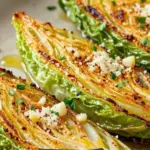
Roasted Cabbage Wedges — Savor the Flavour
Ingredients
- 1 large green cabbage (about 1–1.2 kg) 🥬
- 3 tbsp olive oil 🫒
- 3 tbsp melted butter 🧈
- 3 cloves garlic, minced 🧄
- 1 lemon, zested and juiced 🍋
- 2 tbsp grated Parmesan (optional) 🧀
- 1 tsp smoked paprika or chili flakes 🌶️
- 1 tsp sea salt 🧂
- ½ tsp freshly ground black pepper 🧂
- 2 tbsp fresh parsley, chopped 🌿
Instructions
- Preheat oven to 220°C (425°F). Line a baking sheet with parchment paper or foil.
- Remove any loose outer leaves from the cabbage and cut the head into 6–8 wedges, keeping the core intact to hold each wedge together.
- In a small bowl, mix the olive oil, melted butter, minced garlic, lemon zest and juice, smoked paprika (or chili flakes), salt and pepper.
- Brush or spoon the oil-butter mixture over both sides of each cabbage wedge, making sure it gets between the layers.
- Place wedges on the prepared baking sheet, cut side down. Sprinkle Parmesan over the tops if using.
- Roast in the preheated oven for 20–25 minutes, then flip wedges and roast another 8–12 minutes, until edges are deeply browned and centers are tender.
- Remove from oven and sprinkle with chopped parsley. Taste and adjust seasoning with extra salt, pepper or lemon if desired.
- Serve warm as a side dish or topped with a dollop of yogurt or tahini sauce for a heartier presentation.