
Few dishes prove that simplicity is powerful quite like Cacio e Pepe. This iconic Roman pasta uses just a handful of ingredients — pasta, cheese, black pepper, and pasta water — yet delivers one of the most flavorful and satisfying meals in Italian cuisine.
Creamy without cream, rich without butter, and bold without complicated sauces, Cacio e Pepe is a perfect example of how technique transforms simple ingredients into something extraordinary.
In this complete guide, you’ll learn what Cacio e Pepe is, its origins, ingredients, step-by-step instructions, common mistakes to avoid, and expert tips for achieving the perfect silky sauce.
Print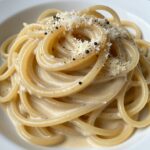
Cacio e Pepe
Description
Cacio e Pepe
Discover the simplest Italian pasta: creamy Cacio e Pepe ready in minutes!
Ingredients
– Spaghetti – 200 g 🍝
– Pecorino Romano – 100 g grated 🧀
– Black pepper – 2 tsp freshly ground 🌶️
– Salt – 1 tbsp (for boiling water) 🧂
– Reserved pasta water – 1 cup 💧
– Butter (optional) – 1 tbsp 🧈
Instructions
1 Bring a large pot of salted water to a rolling boil.
2 Cook spaghetti until just before al dente according to package instructions.
3 Reserve 1 cup of pasta cooking water, then drain the pasta.
4 Toast freshly ground black pepper in a cold pan over medium heat until fragrant.
5 Add a ladle of hot pasta water to the pan, then remove from heat and stir in grated Pecorino to form a creamy emulsion.
6 Return pasta to the pan and toss vigorously, adding more pasta water a little at a time until the sauce coats the strands.
7 Adjust seasoning, plate, and finish with extra Pecorino and a crack of black pepper.
8 Serve immediately.
What Is Cacio e Pepe?
Cacio e Pepe translates from Roman dialect as:
- “Cacio” = cheese
- “Pepe” = pepper
The dish comes from Rome and is traditionally made with:
- Pasta (usually tonnarelli or spaghetti)
- Pecorino Romano cheese
- Freshly cracked black pepper
- Starchy pasta water
There is no cream, no garlic, no butter in the traditional recipe. The creaminess comes purely from emulsifying cheese with pasta water.
The History of Cacio e Pepe
Cacio e Pepe dates back centuries and was popular among Roman shepherds. The ingredients were simple and portable:
- Dried pasta
- Aged Pecorino Romano (which keeps well)
- Black pepper
It became a staple of Roman cuisine and remains one of the city’s most beloved pasta dishes today.
Why This Pasta Is So Special
Cacio e Pepe stands out because:
- It uses only a few ingredients
- It relies on technique, not extras
- It delivers intense flavor
- It’s ready in about 20 minutes
When made properly, the sauce is smooth and glossy, coating every strand of pasta without clumping.
Ingredients (Authentic Version)
For 2–3 servings:
- 12 oz (340g) spaghetti or tonnarelli
- 1 ½ cups finely grated Pecorino Romano cheese
- 1–2 teaspoons freshly cracked black pepper
- Salt (for pasta water)
That’s it.
Step-by-Step: How to Make Perfect Cacio e Pepe
Step 1: Boil the Pasta
Bring a pot of salted water to a boil. Use slightly less water than usual — this helps create starchier pasta water.
Cook pasta until al dente.
Before draining, reserve at least 1 cup of pasta water.
Step 2: Toast the Black Pepper
In a large skillet over medium heat:
- Add freshly cracked black pepper.
- Toast for about 30–60 seconds until fragrant.
This step enhances the pepper’s flavor.
Step 3: Add Pasta Water
Add about ½ cup of reserved pasta water to the skillet with the pepper.
Let it simmer gently.
Step 4: Combine Pasta and Sauce Base
Transfer the pasta directly into the skillet.
Toss to coat and allow the pasta to finish cooking in the pepper-infused water.
Step 5: Create the Cheese Sauce
This is the most important step.
Option 1 (Traditional Pan Method):
- Remove the skillet from direct heat.
- Gradually add finely grated Pecorino Romano.
- Toss continuously, adding small amounts of pasta water as needed.
Option 2 (Safer Bowl Method):
- In a separate bowl, mix grated cheese with a small amount of warm (not boiling) pasta water.
- Stir until a thick paste forms.
- Add this mixture to the pasta and toss.
The goal is a creamy, glossy sauce — not clumpy or stringy.
Step 6: Adjust and Serve
Add extra pasta water if needed to loosen the sauce.
Serve immediately with extra Pecorino and freshly cracked black pepper on top.
Common Mistakes to Avoid
1. Overheating the Cheese
High heat causes Pecorino to clump. Always remove from direct heat before adding cheese.
2. Using Pre-Shredded Cheese
Pre-packaged cheese contains anti-caking agents that prevent smooth melting. Always grate fresh Pecorino.
3. Not Using Enough Pasta Water
Starchy water is essential for emulsification.
4. Using Fine Powdered Pepper
Freshly cracked black pepper gives the dish its signature bold flavor.
Expert Tips for Creamy Cacio e Pepe
- Finely grate cheese using the smallest holes of a grater.
- Stir constantly while adding cheese.
- Add pasta water gradually — not all at once.
- Serve immediately; the sauce thickens as it cools.
What Does Cacio e Pepe Taste Like?
The flavor is:
- Sharp and salty from Pecorino
- Warm and slightly spicy from black pepper
- Comforting and rich from the emulsified sauce
It’s bold yet balanced — simple but deeply satisfying.
Variations (Non-Traditional)
While the authentic version is sacred in Rome, home cooks sometimes adapt it:
Butter-Enriched Version
A small knob of butter adds extra silkiness.
Parmesan Blend
Mix Pecorino Romano with Parmigiano-Reggiano for a milder flavor.
Whole Wheat Pasta
Adds nuttiness and extra fiber.
Gluten-Free Pasta
Works well if cooked properly and reserved water is still starchy.
Keep in mind: purists prefer the original.
Best Pasta for Cacio e Pepe
Traditionally used:
- Tonnarelli
- Spaghetti
Other good options:
- Bucatini
- Linguine
Long pasta shapes hold the sauce best.
Nutritional Overview (Approximate per Serving)
- Calories: 450–550
- Protein: 18–22g
- Fat: 18–25g
- Carbohydrates: 55–65g
Values vary depending on portion size and cheese amount.
Serving Suggestions
Cacio e Pepe pairs beautifully with:
- A simple arugula salad
- Roasted vegetables
- Crusty Italian bread
- Sparkling water or white wine
Because the pasta is rich, light side dishes work best.
Frequently Asked Questions
Can I make Cacio e Pepe without Pecorino Romano?
Authentically, no. However, Parmesan can be used in a pinch.
Why did my sauce turn into clumps?
The cheese likely overheated or the water wasn’t starchy enough.
Is Cacio e Pepe vegetarian?
Yes, if the cheese is made without animal rennet.
Final Thoughts
Cacio e Pepe is proof that great cooking doesn’t require complicated ingredients — just quality products and proper technique. With practice, you can master this Roman classic and create a silky, peppery pasta that rivals restaurant versions.
Once you learn how to balance the heat and emulsify the cheese correctly, this simple dish becomes one of the most reliable and impressive meals you can make.
Simple. Bold. Timeless.
Cacio e Pepe truly represents the heart of Italian comfort food.